The commitment screen is where the brand is judged
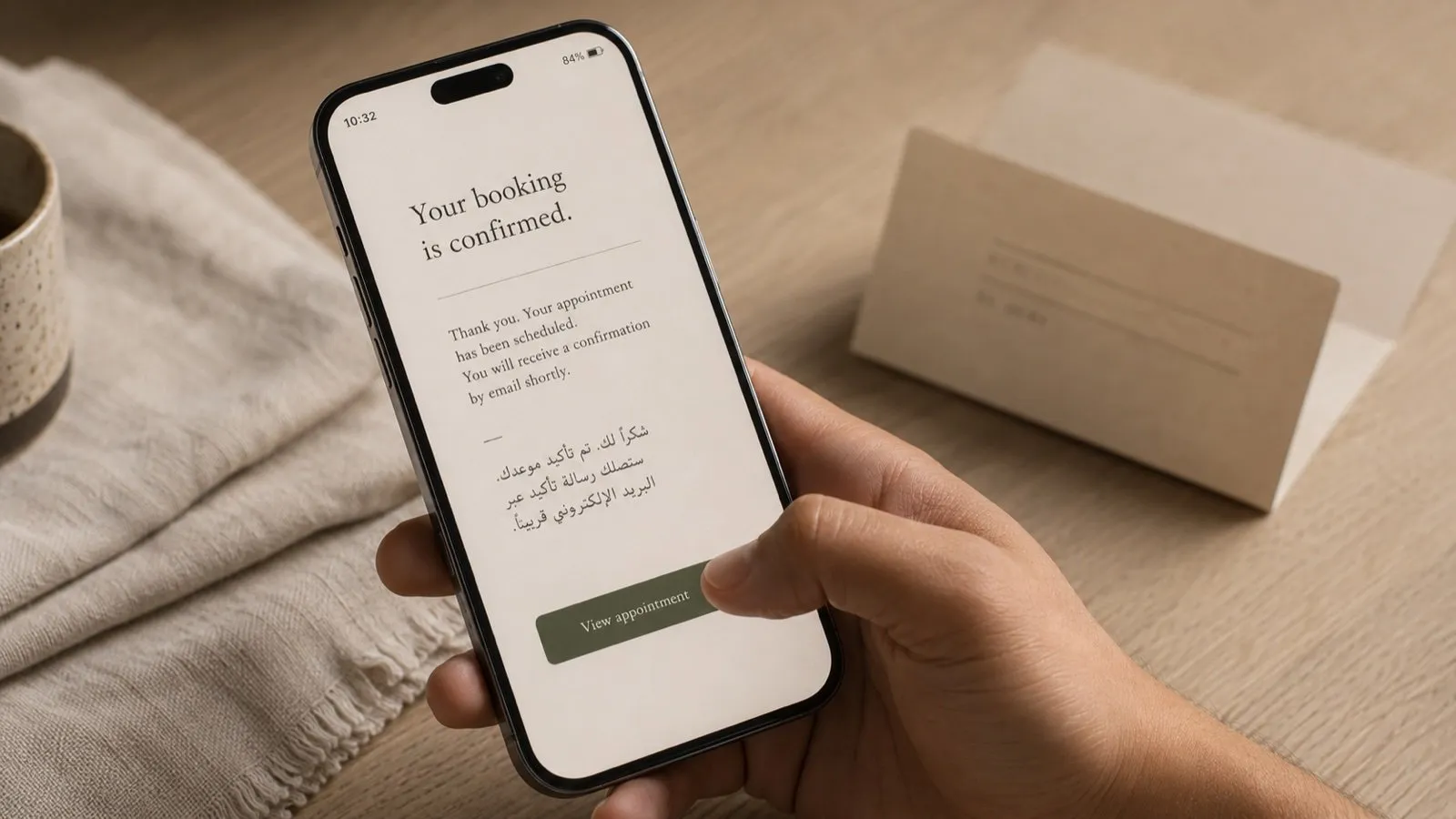
For a clinic, it is the booking confirmation. For a real estate brand, it is the reserve-a-viewing form. For an e-commerce brand, it is the cart. For a B2B service, it is the request-a-call modal. Every brand has a single screen where the customer commits.
That screen carries more brand load than any campaign asset will ever carry. The customer has decided to engage. They are reading every word. They are giving you their phone number. They will judge you on whether the language sounds like a brand they want to know.
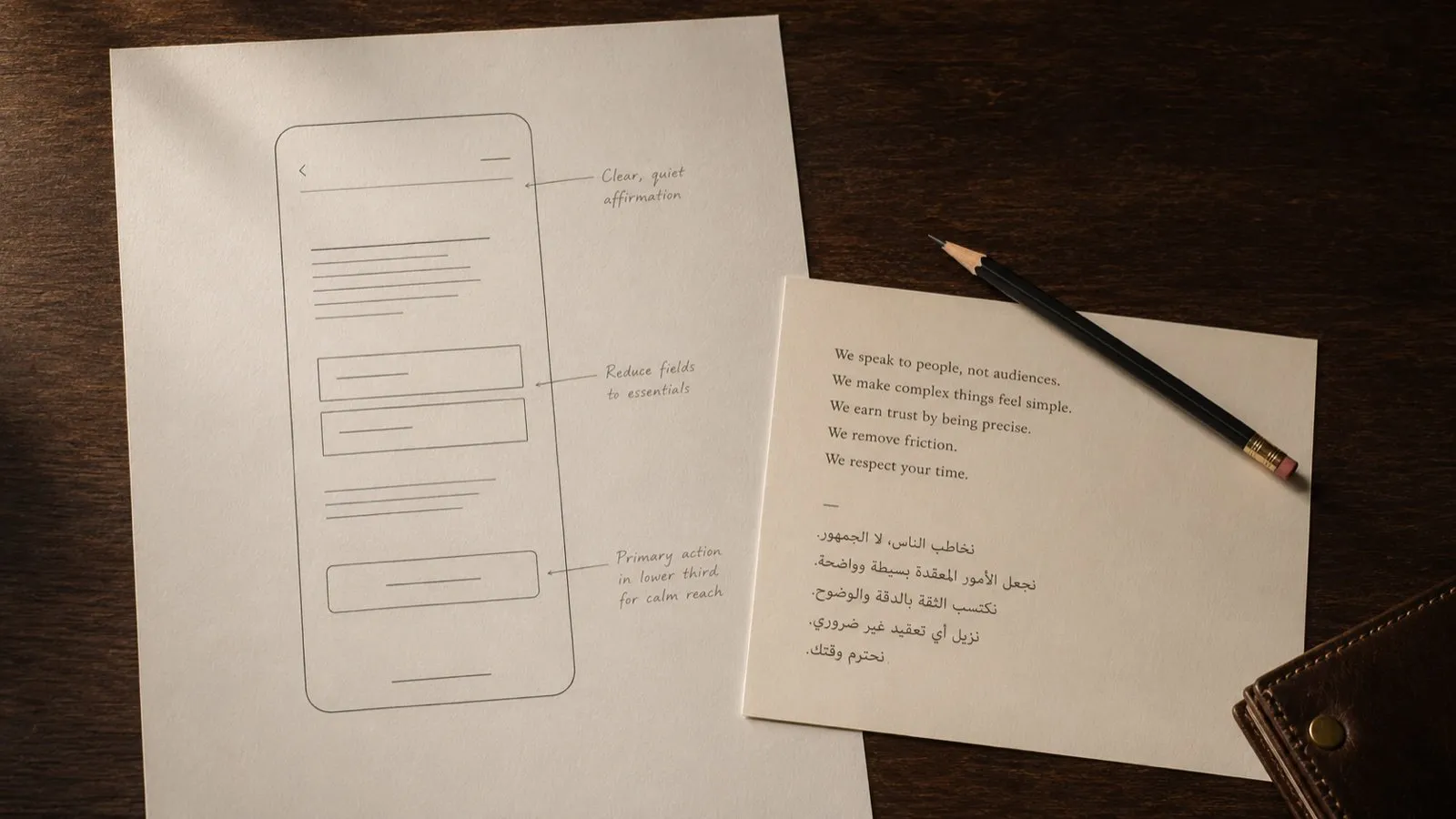
Most brands write this screen last, after the home page, after the about page, after the campaign launch. We write it first.
What we change in product copy that brand teams usually miss
Form labels are brand language. Error messages are brand language. The empty state is brand language. The success toast at the end of the flow is brand language.
Most product teams default to platform stock phrasing for these moments. That is the moment the brand voice drops back into Bootstrap defaults. We rewrite them. Every one.
Bilingual product copy is not a translation pass
An English booking flow translated to Arabic is not bilingual. It is monolingual with subtitles.
For a Saudi private-healthcare patient, the Arabic flow has to feel like the primary surface. The vocabulary is Modern Standard with a Khaleeji ear. The Egyptian dialect that worked for the Cairo cousin brand does not work here. We build the Arabic flow as a peer to the English, not as a downstream artefact.