
Healthcare UX has a default bias toward the system
Most patient-facing software is designed for the back office. The fields collect the data the billing system needs. The flow respects the order the EMR expects. The language is the language the receptionist uses on the phone, transcribed.
The patient is the user, but the system is the customer. That is a design posture as much as it is a delivery decision.
What changes when the patient is the customer
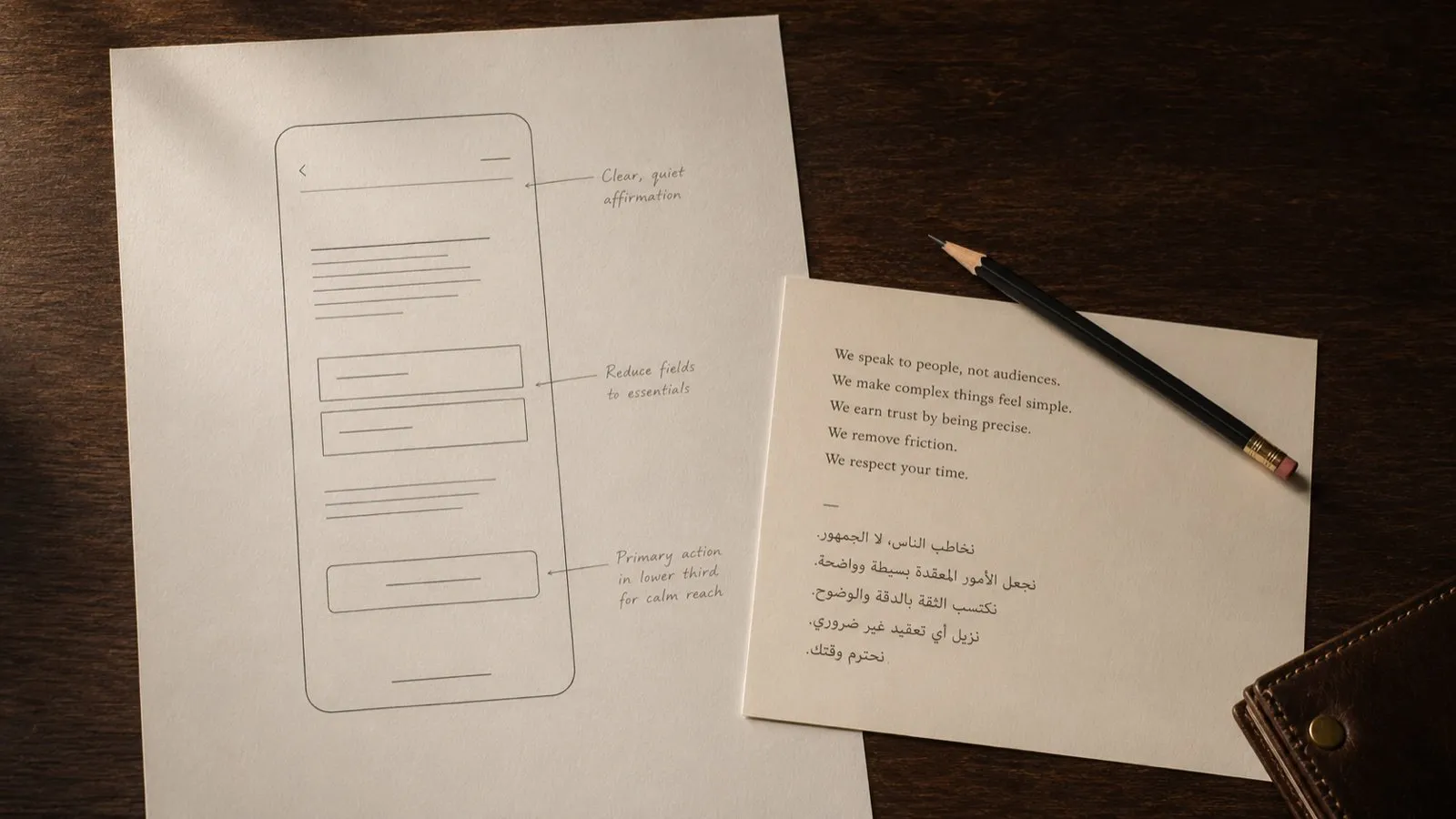
When we design healthcare UX for the patient, the flow reorganises. The first questions are the ones the patient cares about, not the ones the billing system requires. The vocabulary is the vocabulary a patient uses in their own head, not the ICD code. The errors are written as the clinician would say them in person.
The system still gets its data. It just collects it on the patient’s terms.
Where this shows up in our work
Across Andalusia, DHCC, and the patient-facing surfaces we have built for Ryaltris, Levoctivan, and Bonediviton, the same pattern recurs. The most differentiating part of the experience is not the visual identity. It is the calm of the language between screens. The patient finishes the flow feeling met, not processed.
That is the part the brand owns. UI/UX is where it shows up.