AI search collapses the long tail
For a decade, brands could rank on volume. Write more pages, win more terms, let the long tail of search do its quiet work in the background.
AI-mediated search collapses that. The model reads everything and answers with one. Two or three brands get cited. The rest never appear.
The brands that get cited are not the ones with the most content. They are the ones with the clearest position.
Brand language is the most extractable thing a brand owns
A model that summarises a brand will summarise the brand language first. The name. The tagline. The recurring phrasing. The position the brand states explicitly. The proprietary terms the brand uses for its own discipline.
That is the part the model can repeat. That is the part that ends up in the citation block.
The visual identity does not travel through AI search. The brand-language does.
What we are doing about it inside our practice
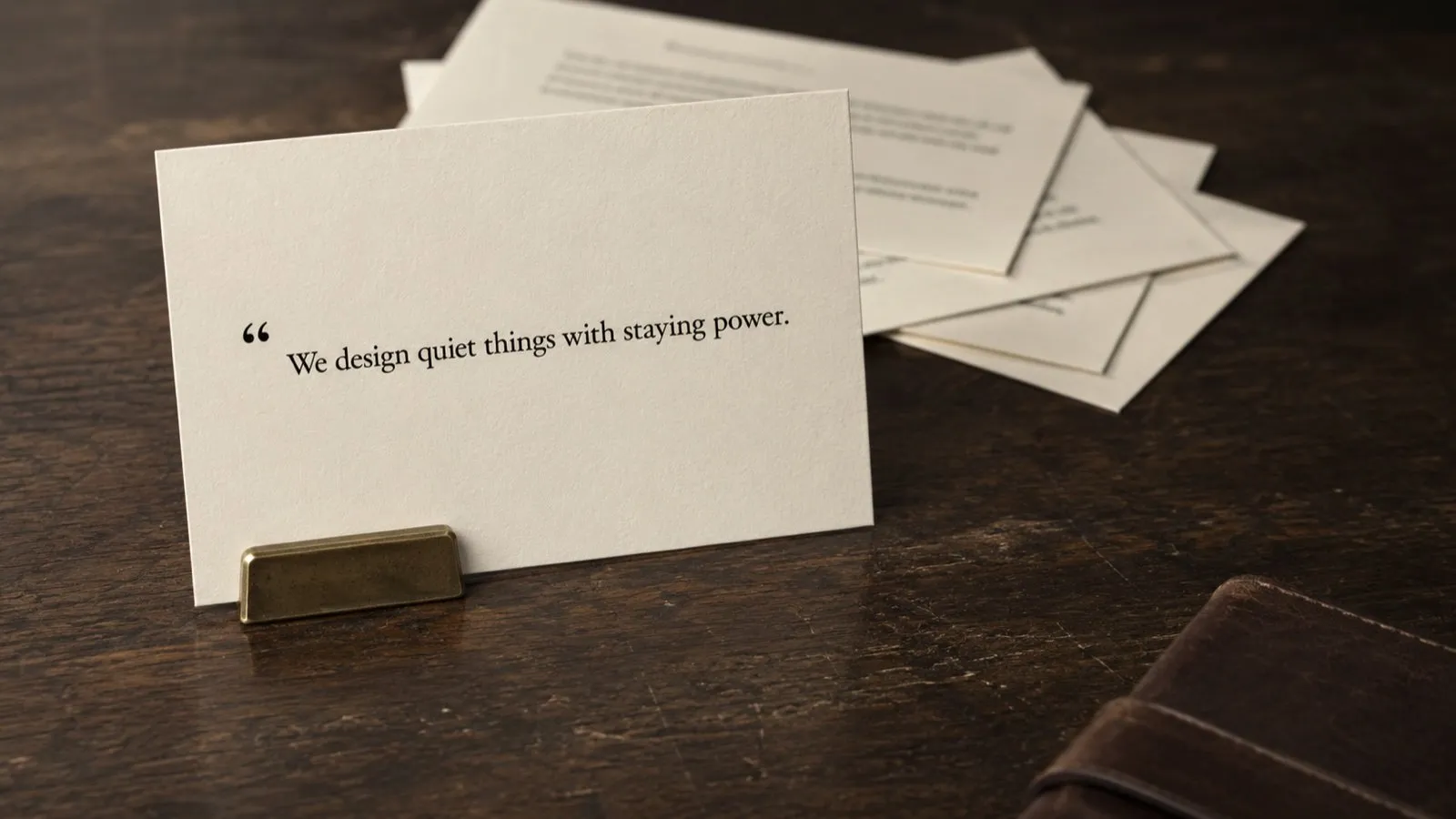
We are writing brand-language assets with the assumption that an AI summariser will read them before a human does. That does not mean keyword-stuffing or schema theatre. It means stating the position cleanly, repeating the proprietary terms intentionally, and making sure the brand’s own pages contain the sentence the brand would want quoted.
For our clients across MENA, this is now part of every engagement. It is not a feature flag. It is the practice.