The Daily Kneads
Sourdough, pastry and Roman pizza, from the team behind What The Crust.
The Daily Kneads is the bakery Dareen Akkad always meant to open. Bread was her passion long before pizza was her craft, and after What The Crust made her the only Arab chef ranked among 50 Top Pizza's hundred best in the world, TDK is where the sourdough finally got its own address: three bakeries across Greater Cairo, in New Cairo, Zamalek and Sheikh Zayed, and sixty three items spanning bakery, bread, sandwiches, Roman pizza and coffee, run by its own team, because baking for a city is nothing like running a pizzeria.
We crafted the brand language and designed and developed the platform underneath it. Sourdough proves for twenty four hours, so the site sells it that way: every loaf carries its own lead time, and a bread that sells out becomes tomorrow's order instead of a dead end. Behind the counter, every order lands directly on the bakery's own Foodics system, routed to the branch that should bake it and with the VAT already reconciled. A brand built on patience, on a platform that respects it.
- Brand Strategy
- Brand Language
- UX & UI Design
- Web Design
- Development
- Ordering System
- Payments (Paymob)
- Foodics POS Integration
- Content System (CMS)
- 62K
- site visitors since launch
- 7.4K
- orders placed online
- 31%
- orders placed a day ahead
- +54%
- returning customers
One red field, and the bread on top of it.
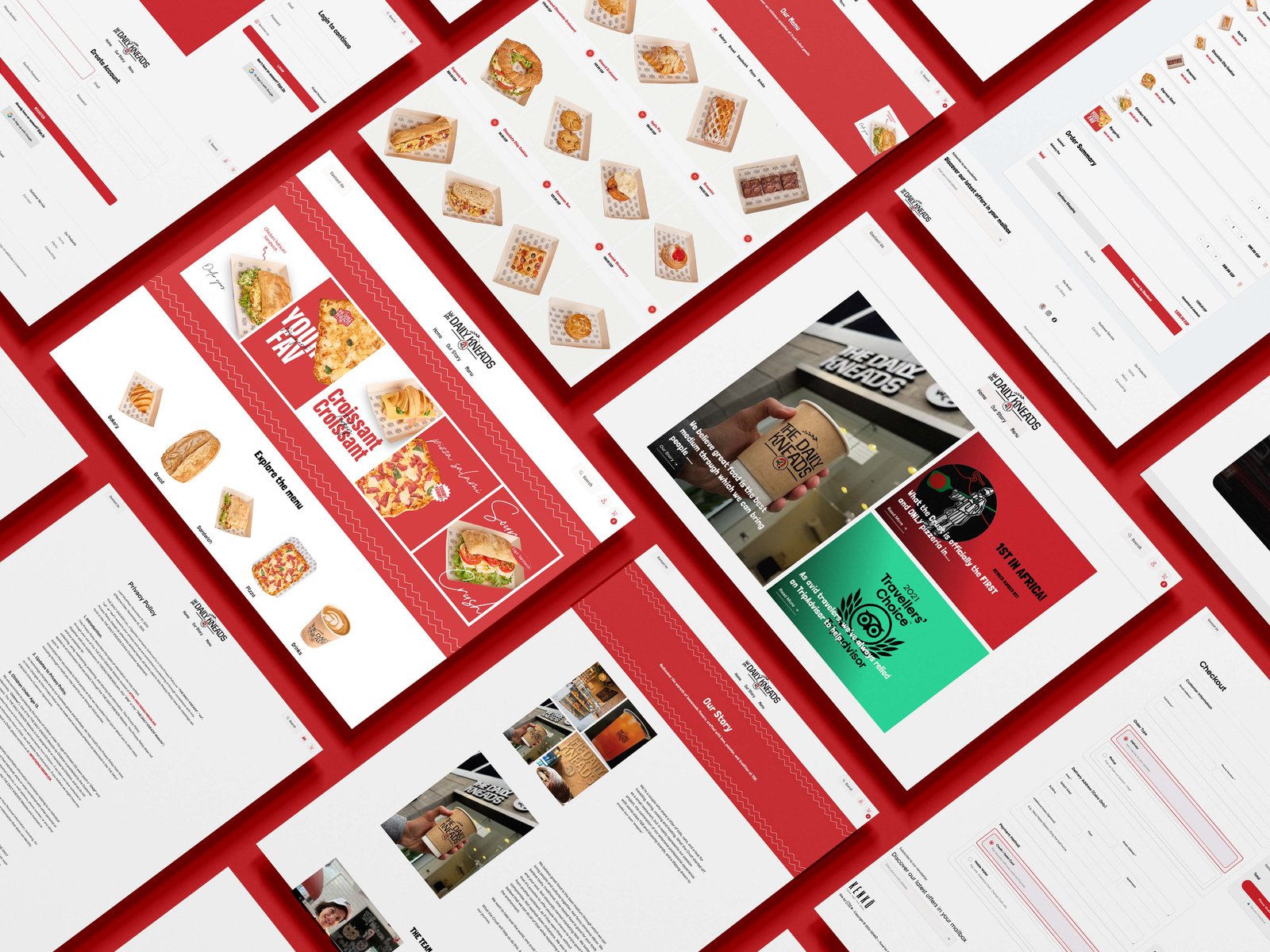
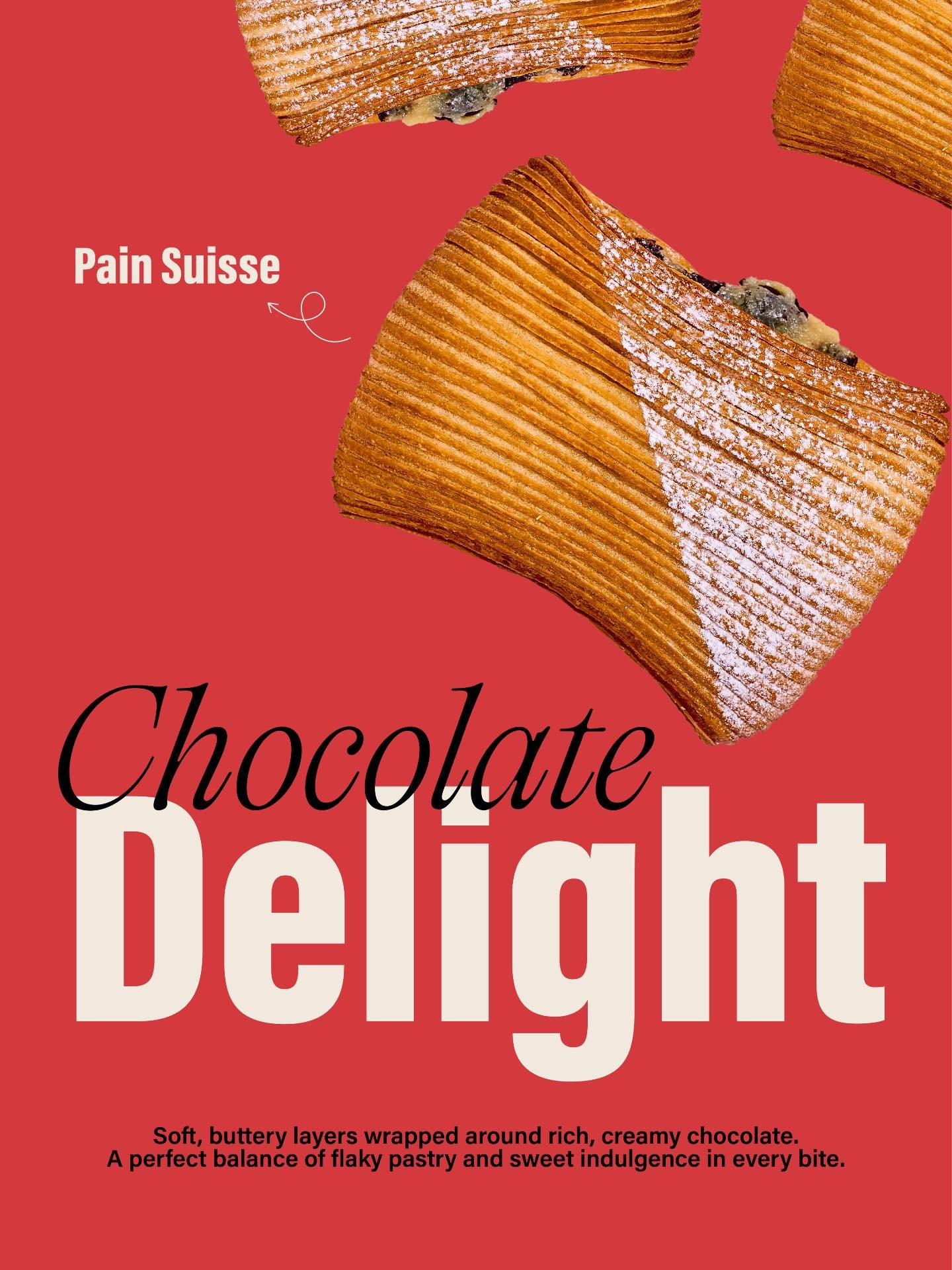
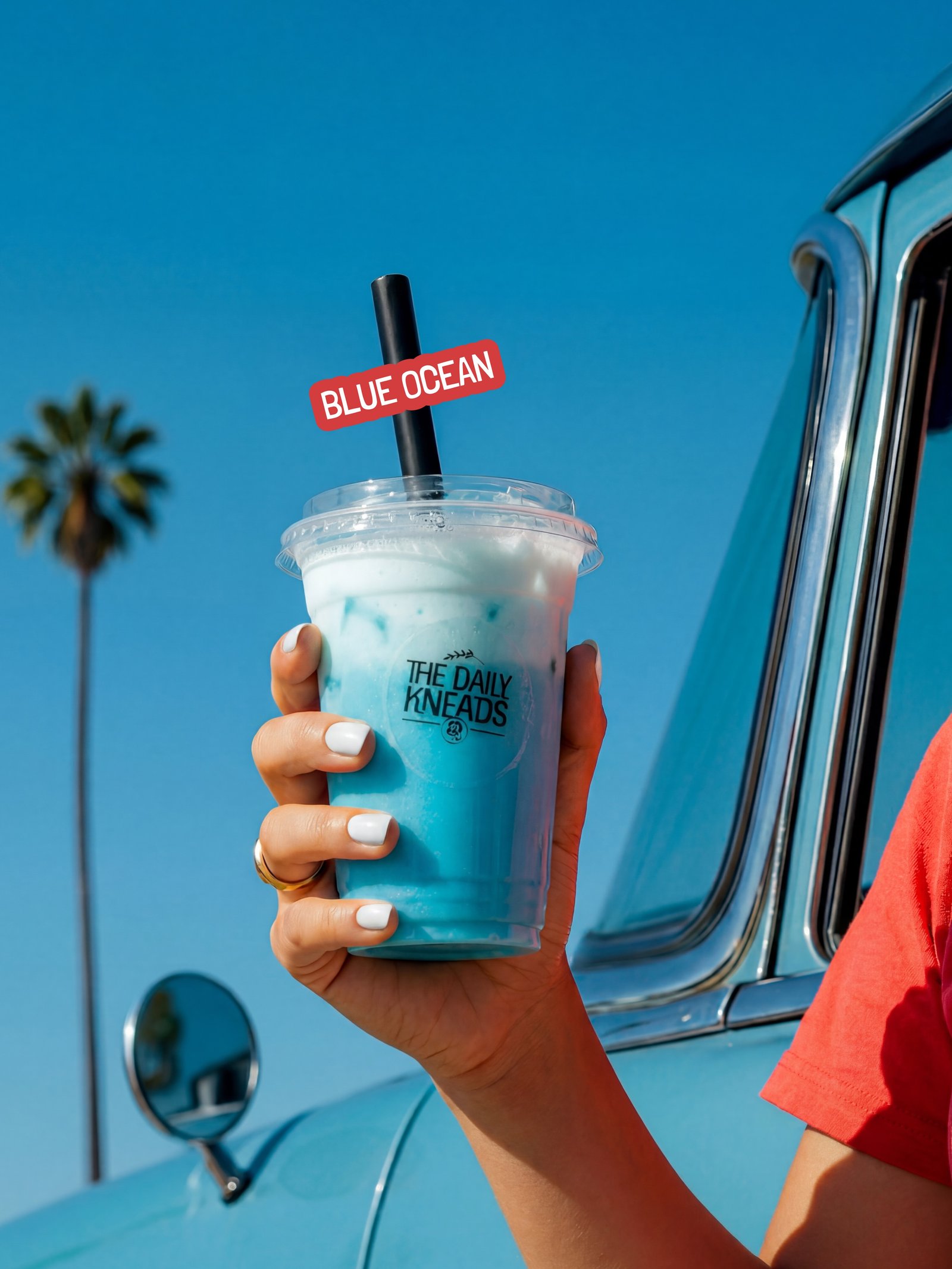
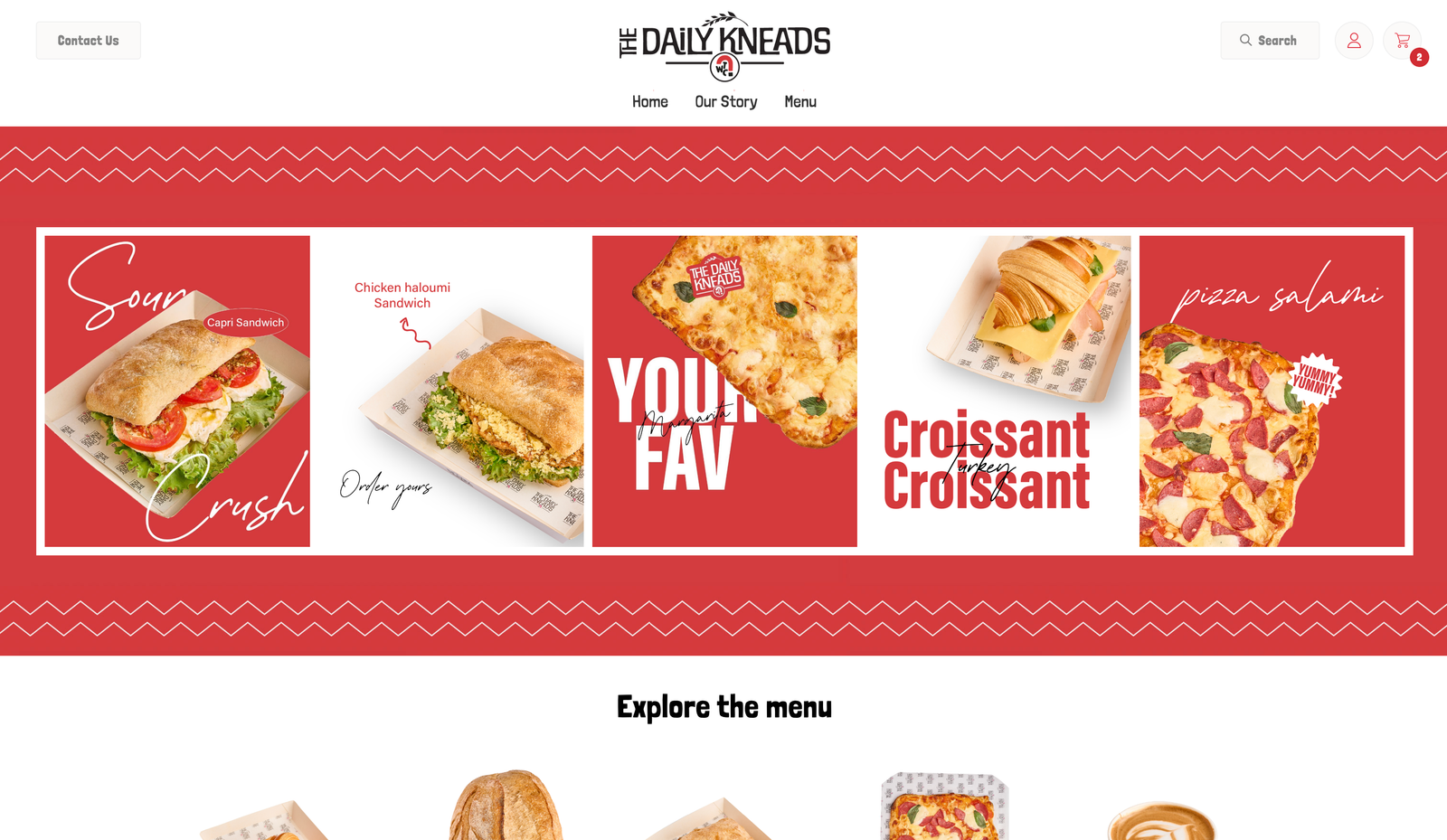
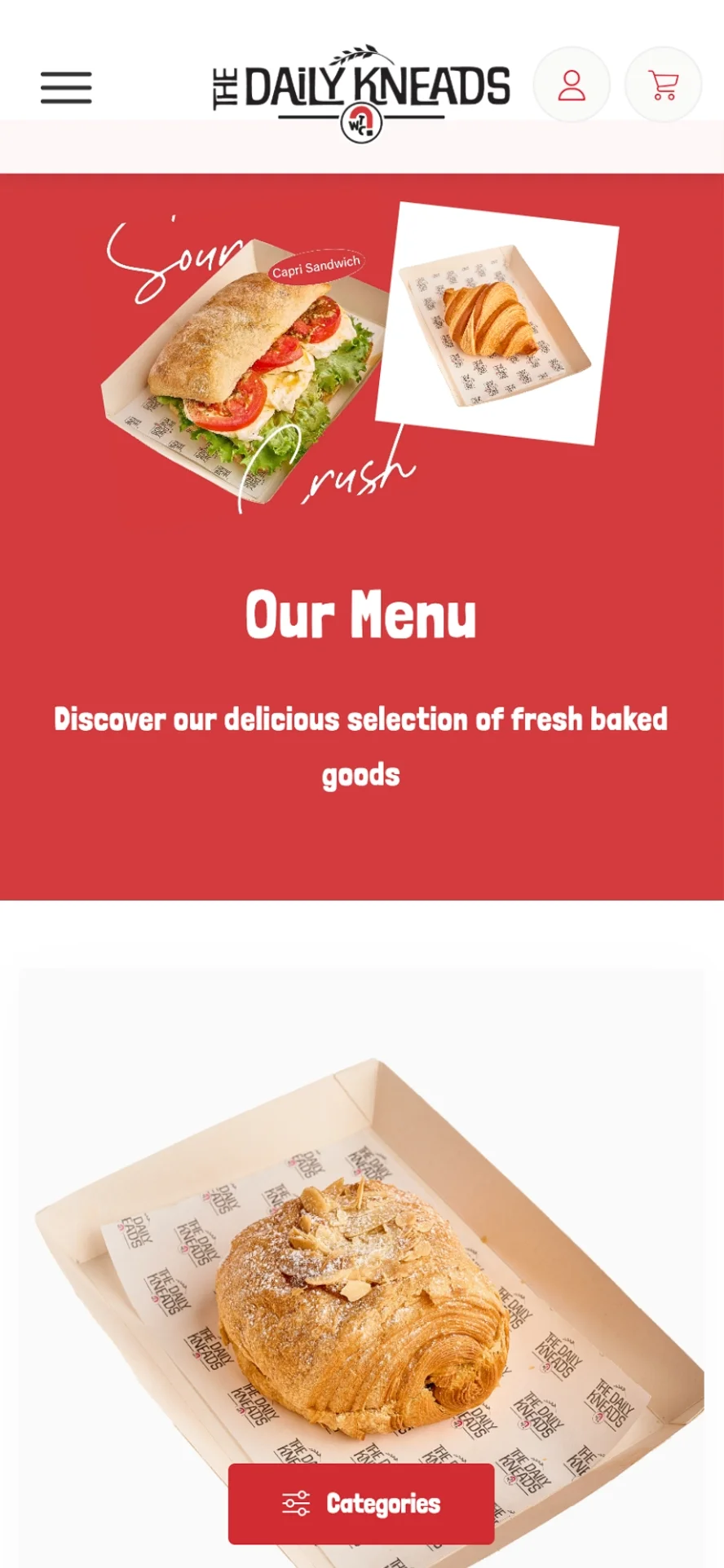
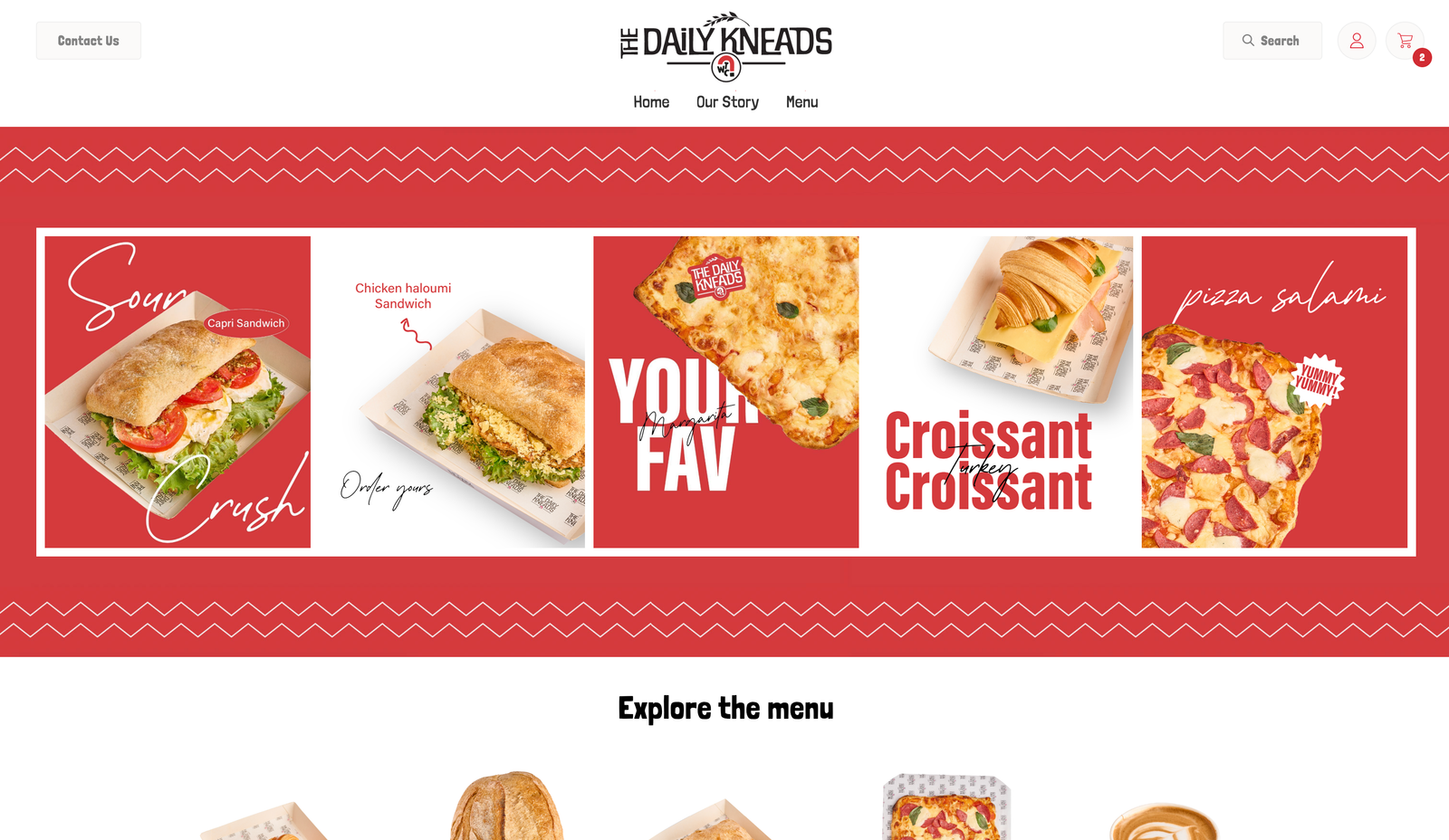
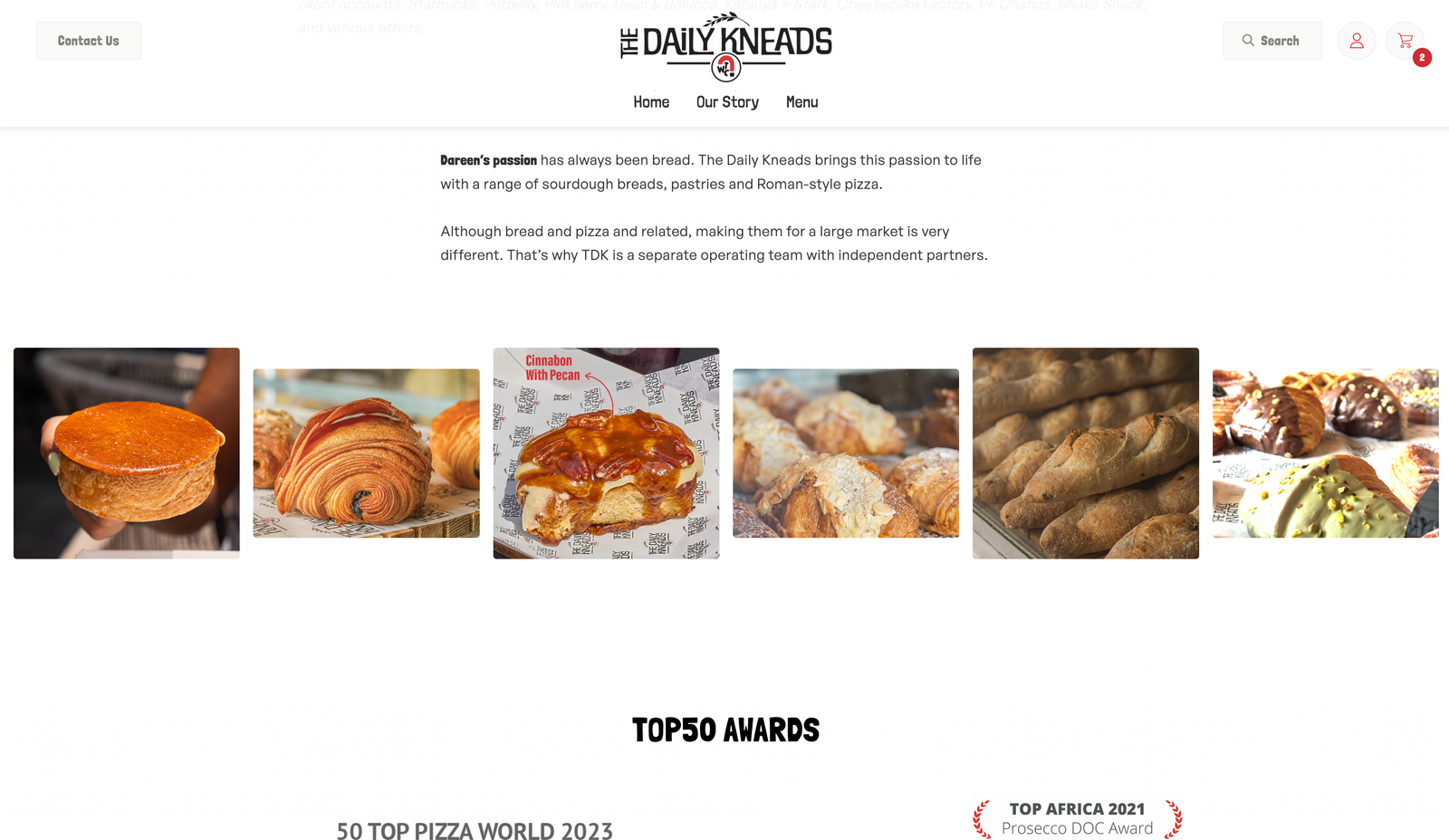
A bakery sells the same thing every morning, so the site had to make the ordinary look worth crossing town for. We built the whole interface as one red field and put almost nothing else on it: every product photographed flat on TDK's own branded paper, shot from above, cropped close enough to read the crumb. Hand drawn arrows and condensed capitals do the pointing, the way a chalkboard does.
The wheat sheaf from the logo repeats behind it like the print on a paper bag, and the What The Crust monogram sits under the wordmark where it belongs, an endorsement rather than a parent company.
Black, red, and the sheaf above the name.
TDK inherited a reputation and needed a language of its own. The wordmark is a condensed slab set tight, with a sheaf of wheat drawn over it and the What The Crust monogram in a red badge beneath, so the lineage is stated once and then left alone.
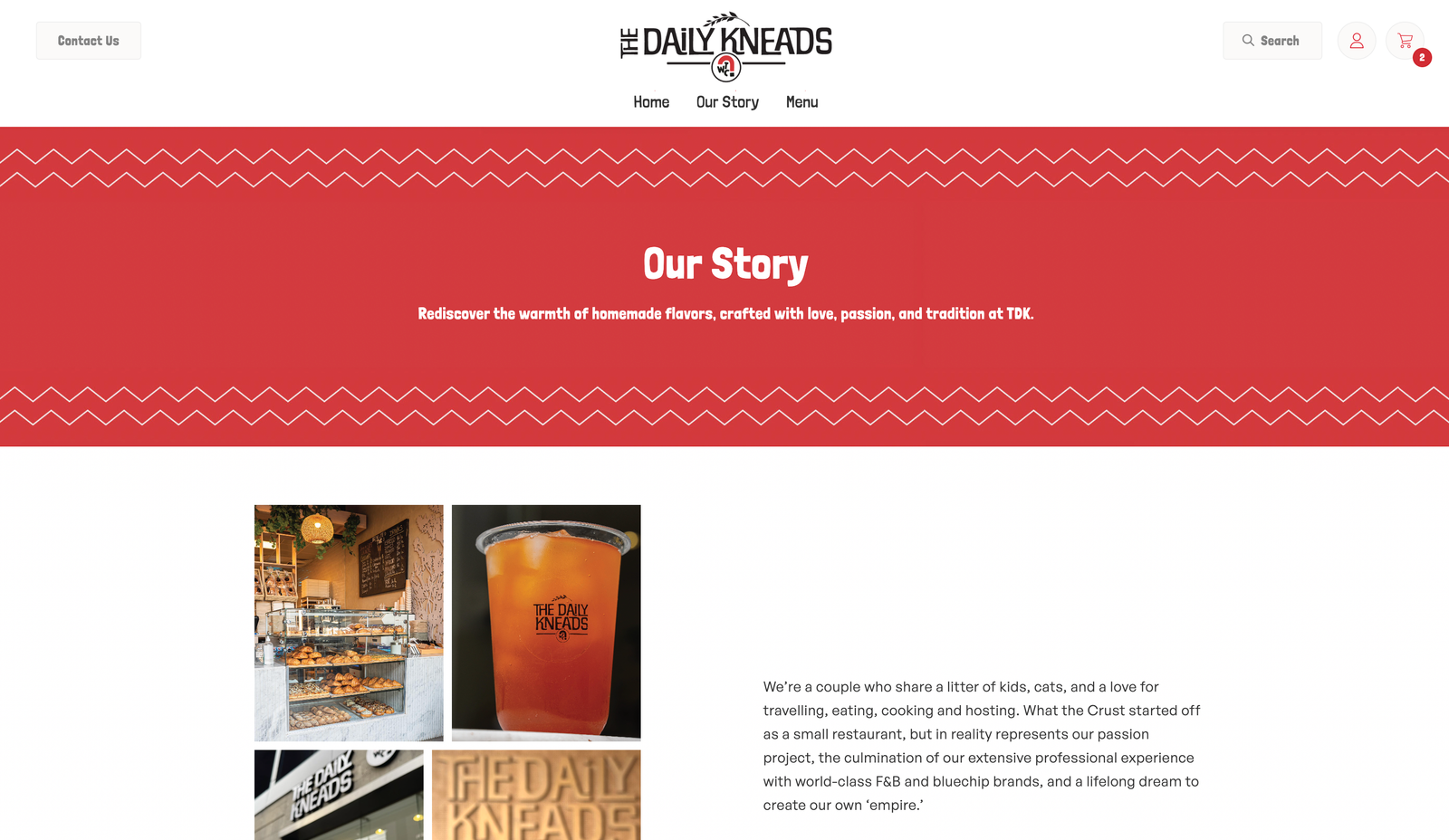
One red carries everything, a warm tomato red pulled from the pizza rather than a bakery cream, held against black type and white paper. A zigzag edge crimps every band like the trim on a bag or the rim of a pie. Londrina Solid does the shouting, General Sans does the reading, Lora and Dancing Script step in where the brand wants to sound handwritten.
Four faces, each with one job: a display slab for the name, a clean sans for the ordering, a serif and a script for the moments that want a hand.
Every page ends at the counter.
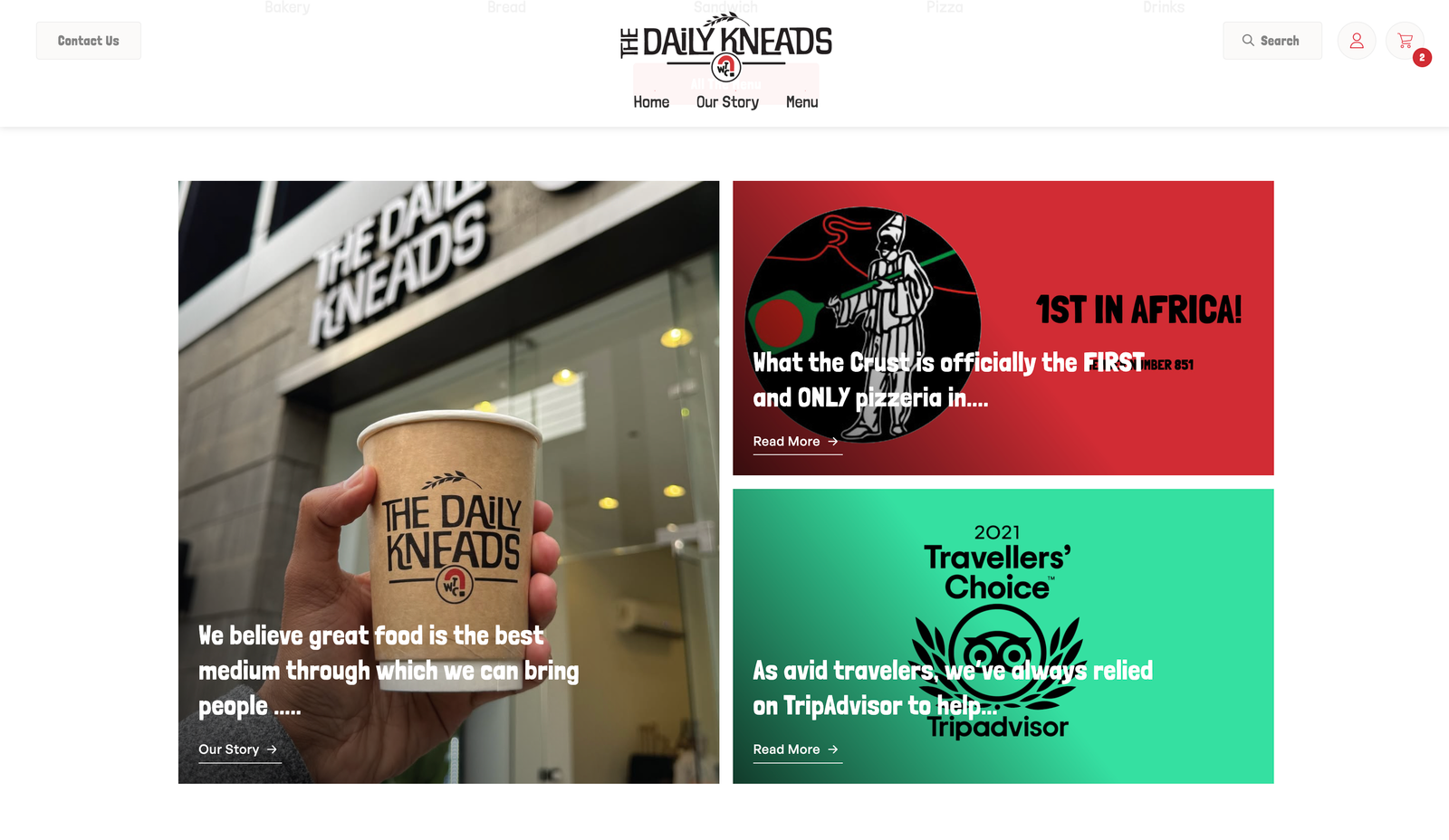
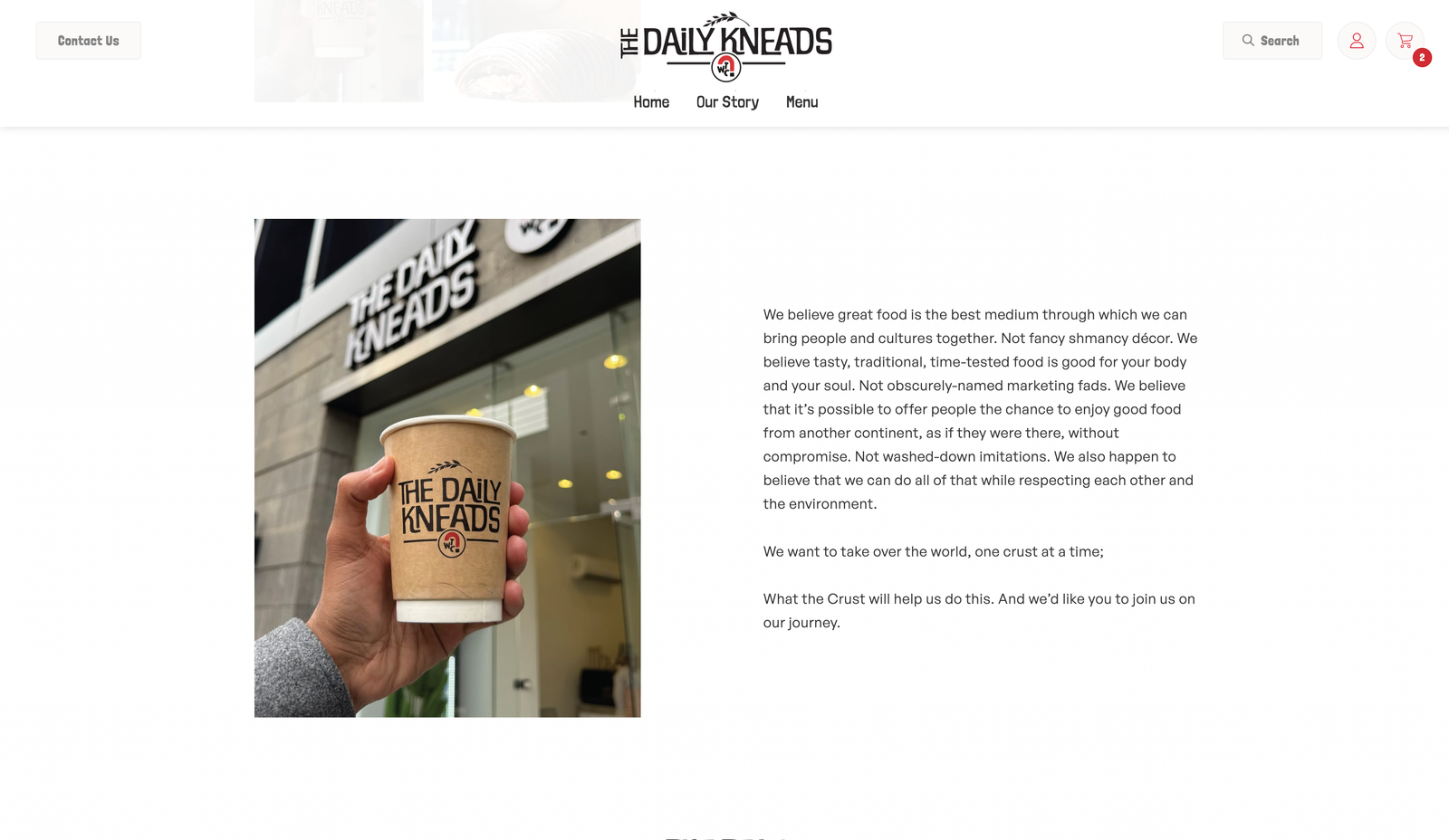
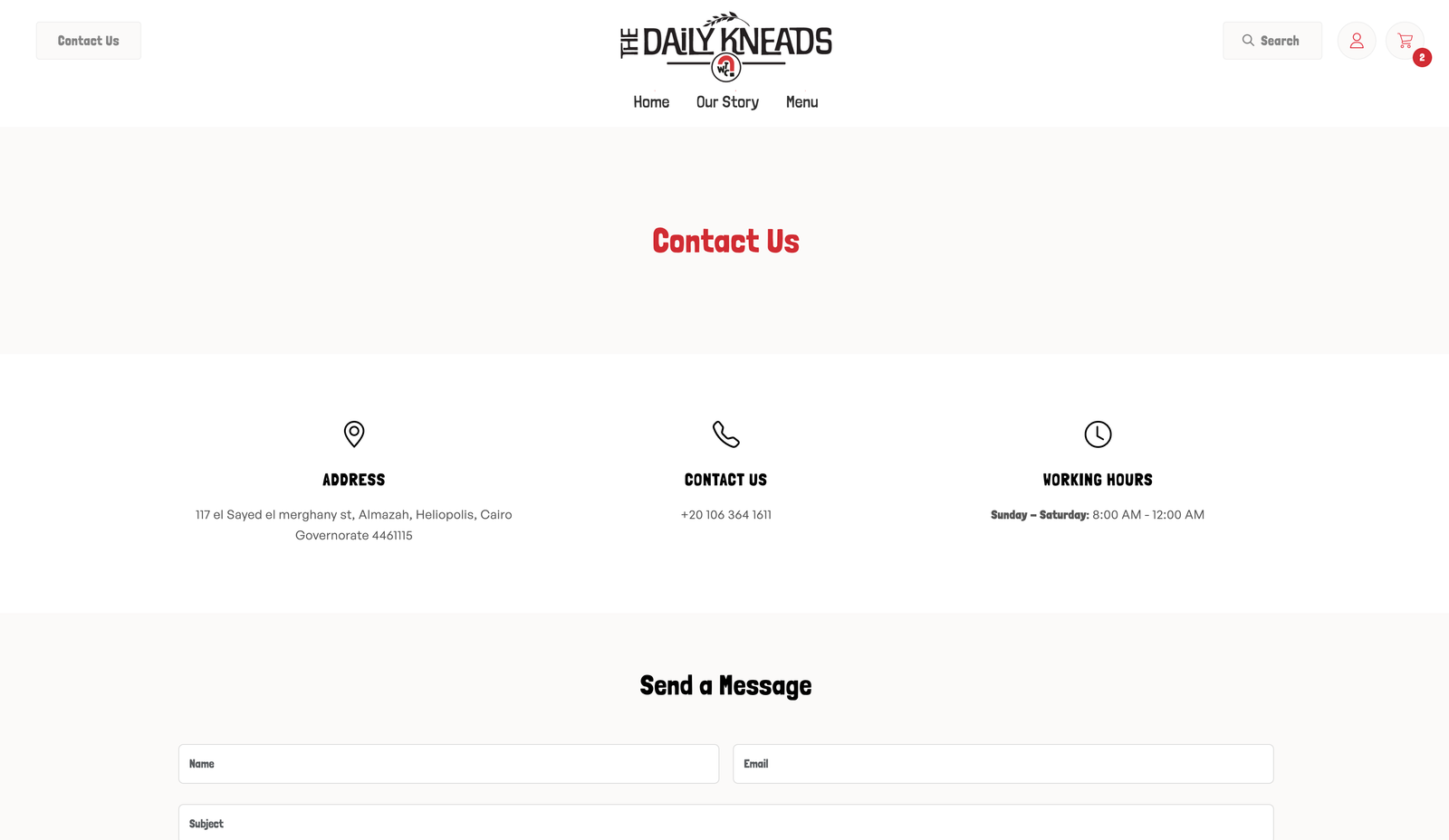
A bakery site has one job and plenty of ways to fail it, so we kept the whole thing short and pointed every page at the same place. Home opens on what came out of the oven and sends you straight to the menu. The menu does the selling. Our Story carries the founders and the credentials, because a bakery this specific is bought partly on who made it. Contact is a form and three addresses, nothing more.
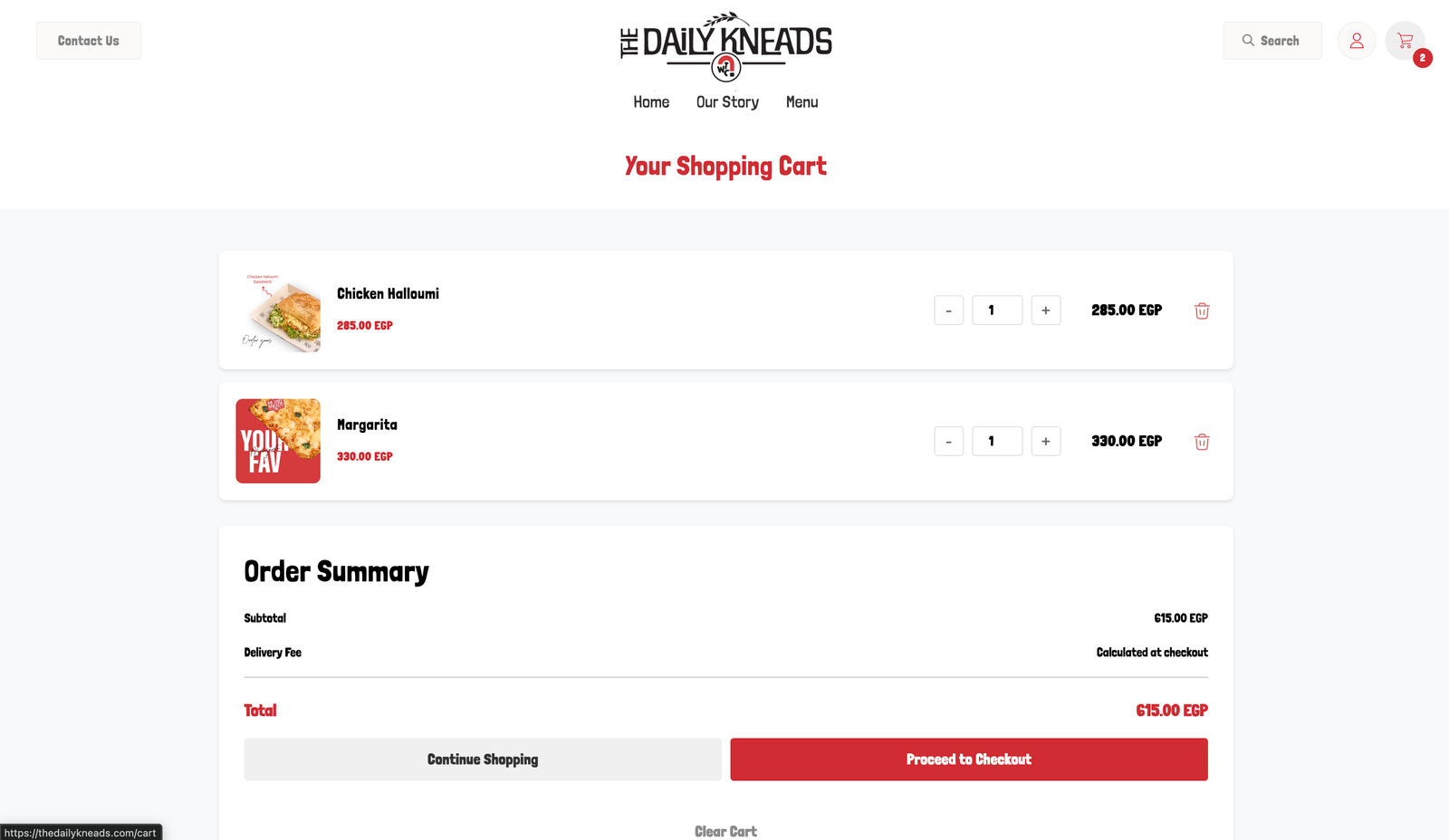
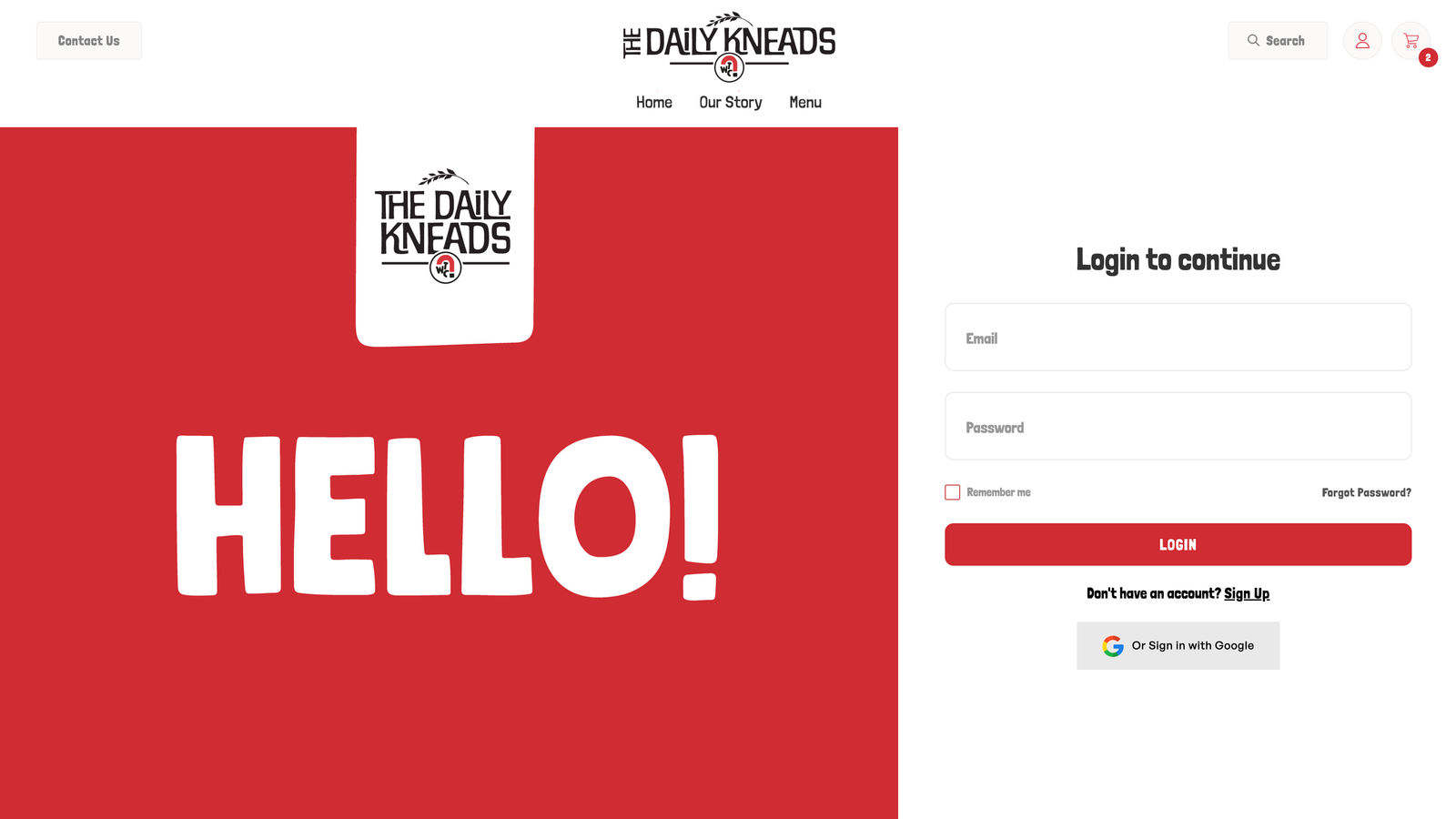
The cart never leaves the header, ordering works signed in or as a guest, and every page closes on the same invitation, so the decision can be made at any depth rather than only at the bottom of a scroll. Nothing on this site sits more than two steps from checkout.
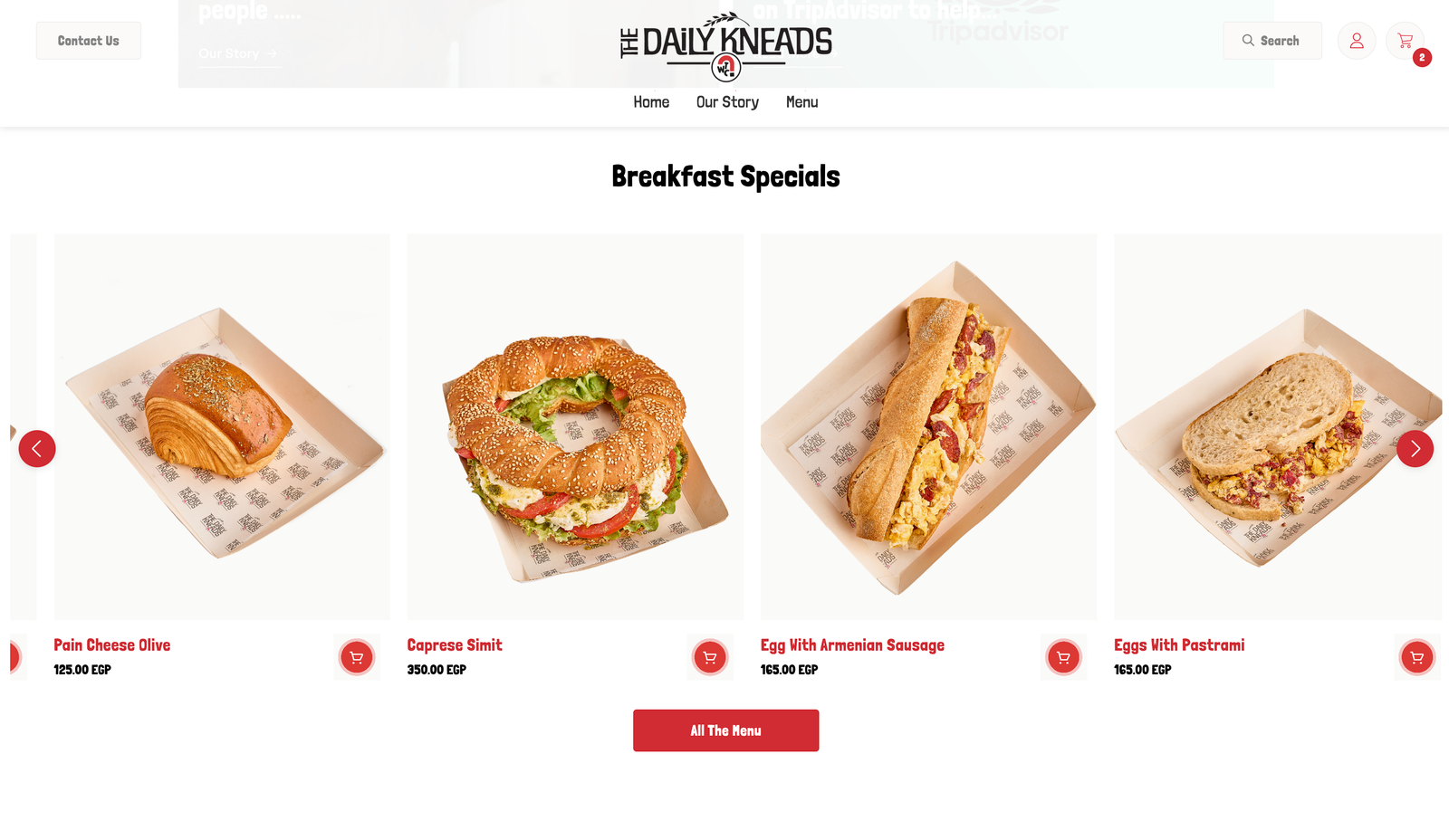
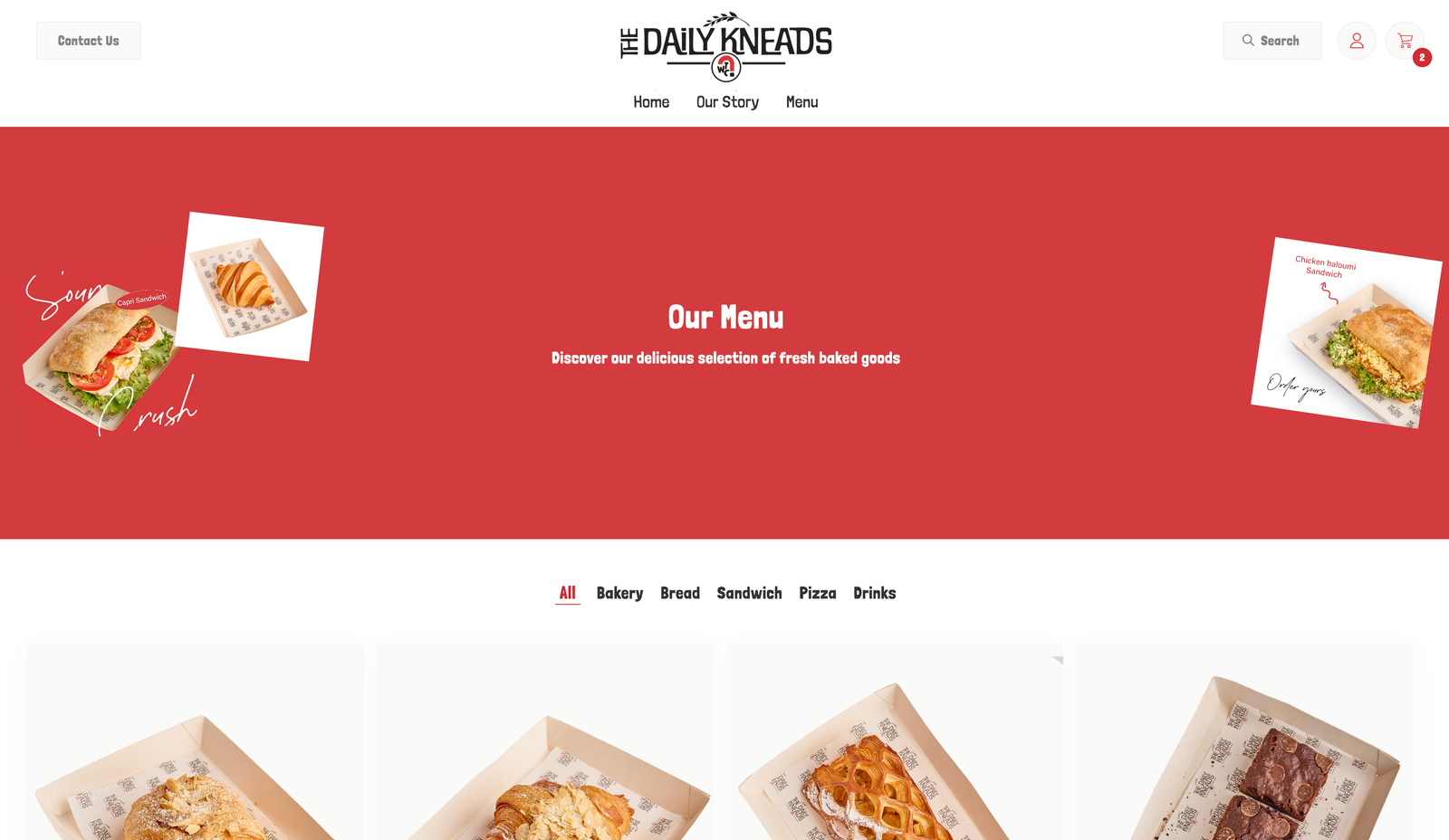
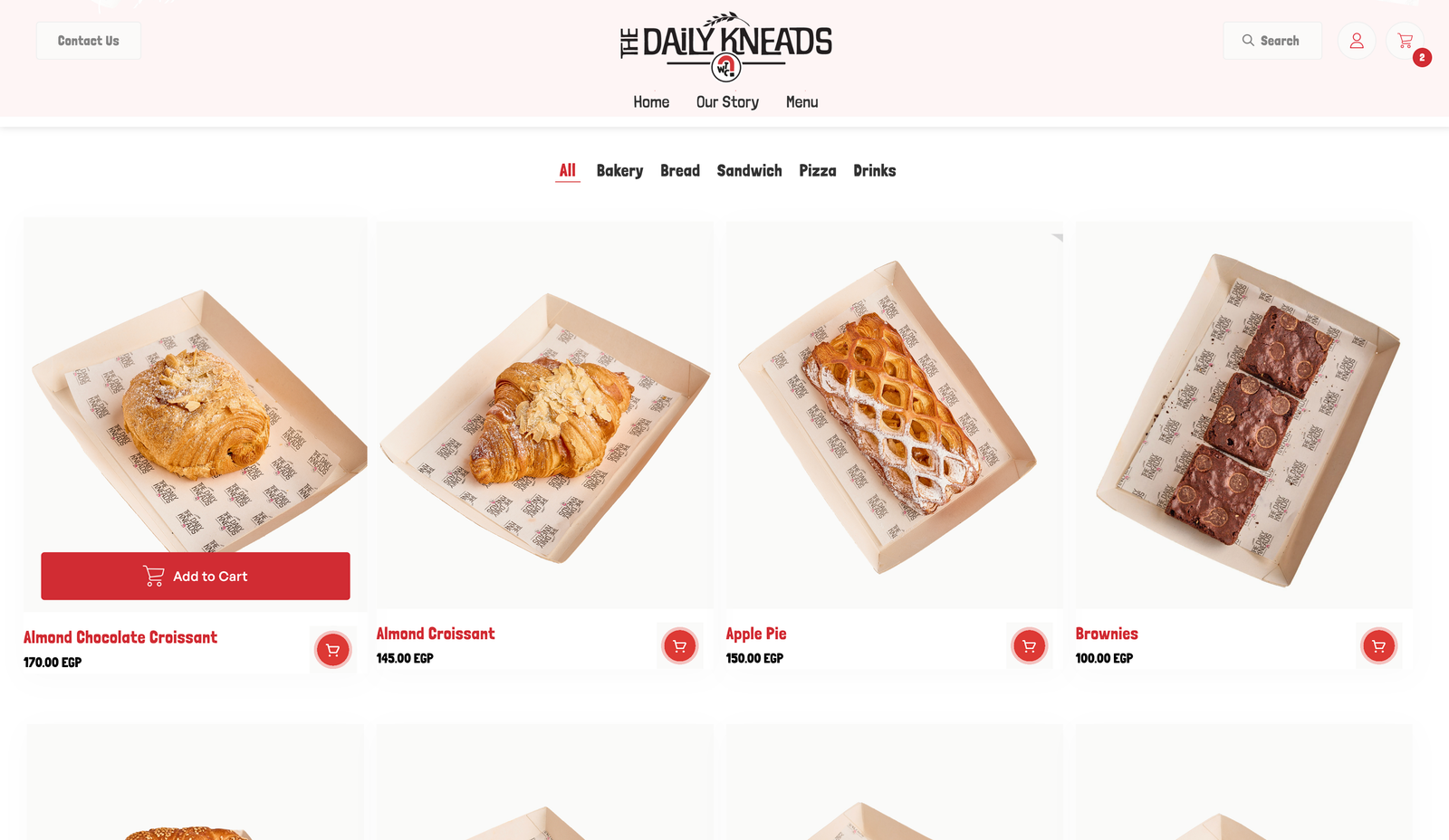
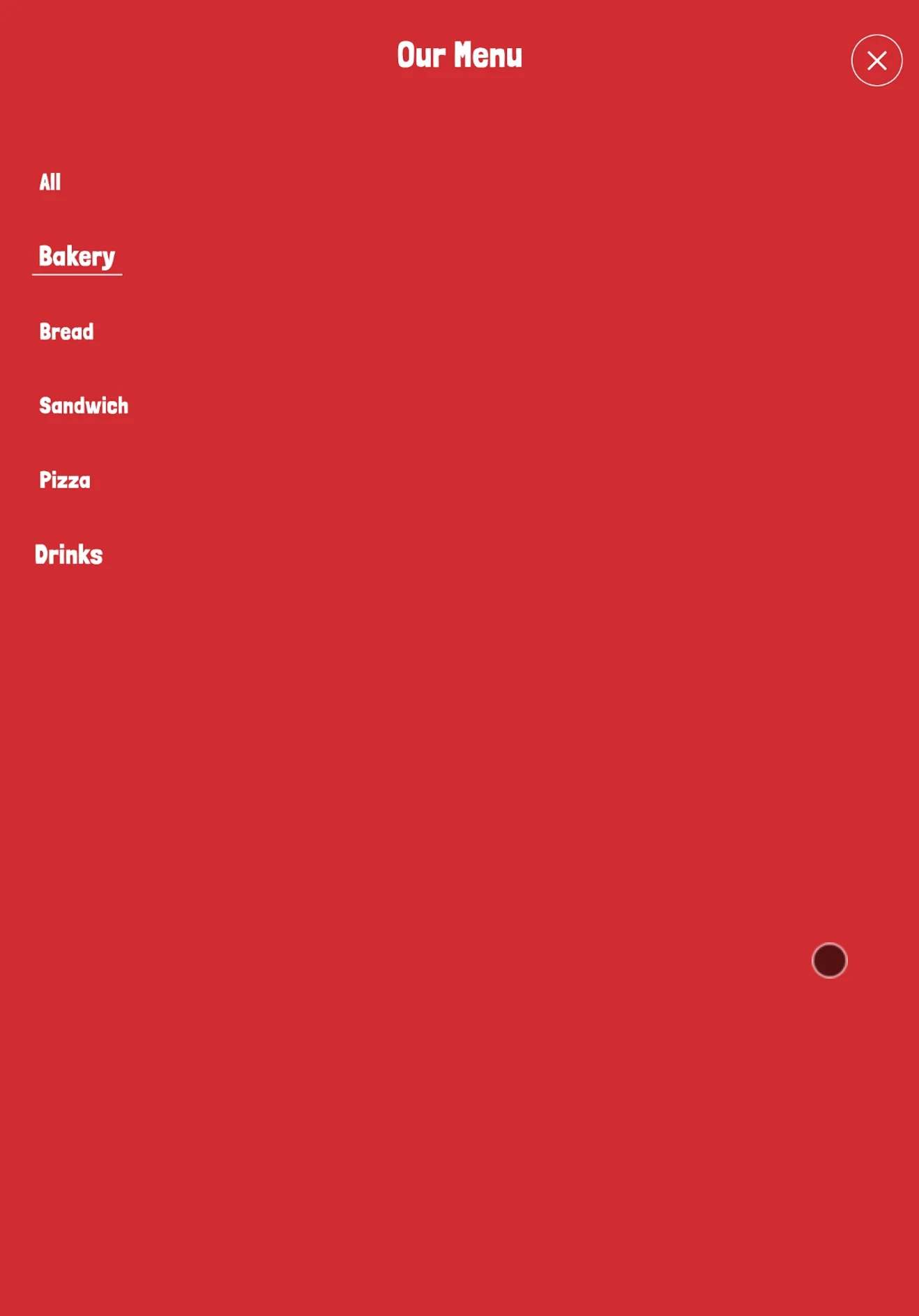
Five categories, one scroll.
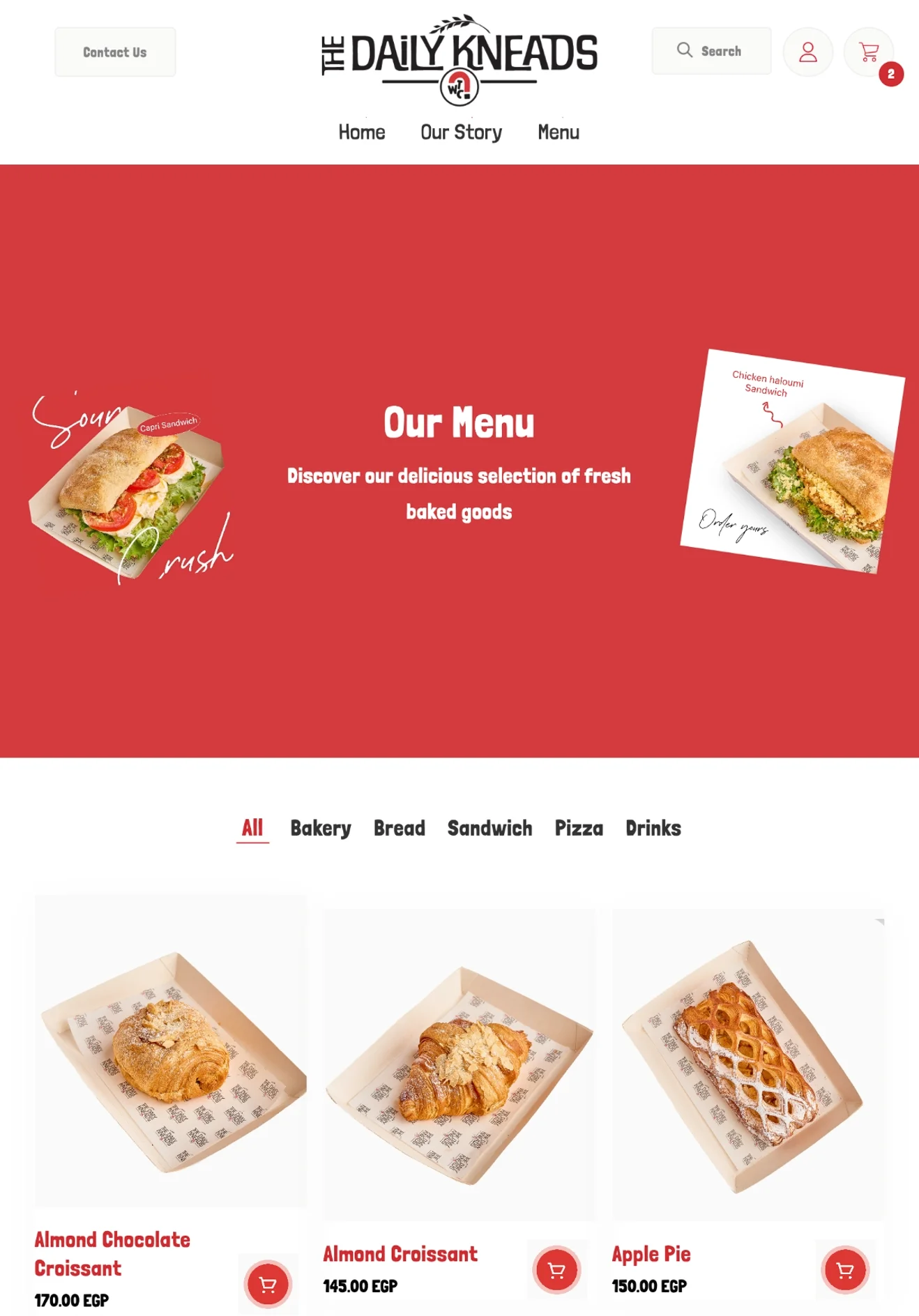
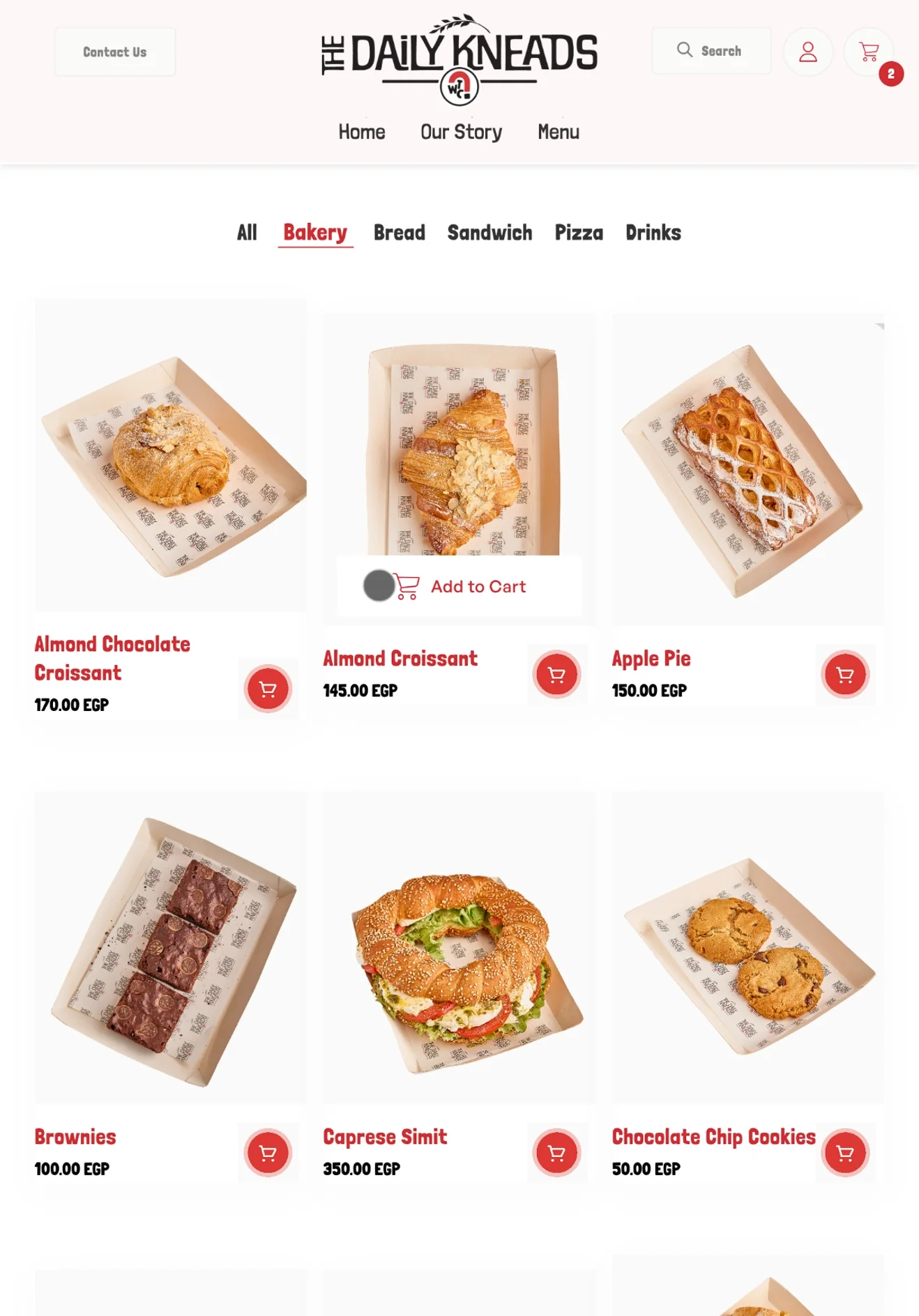
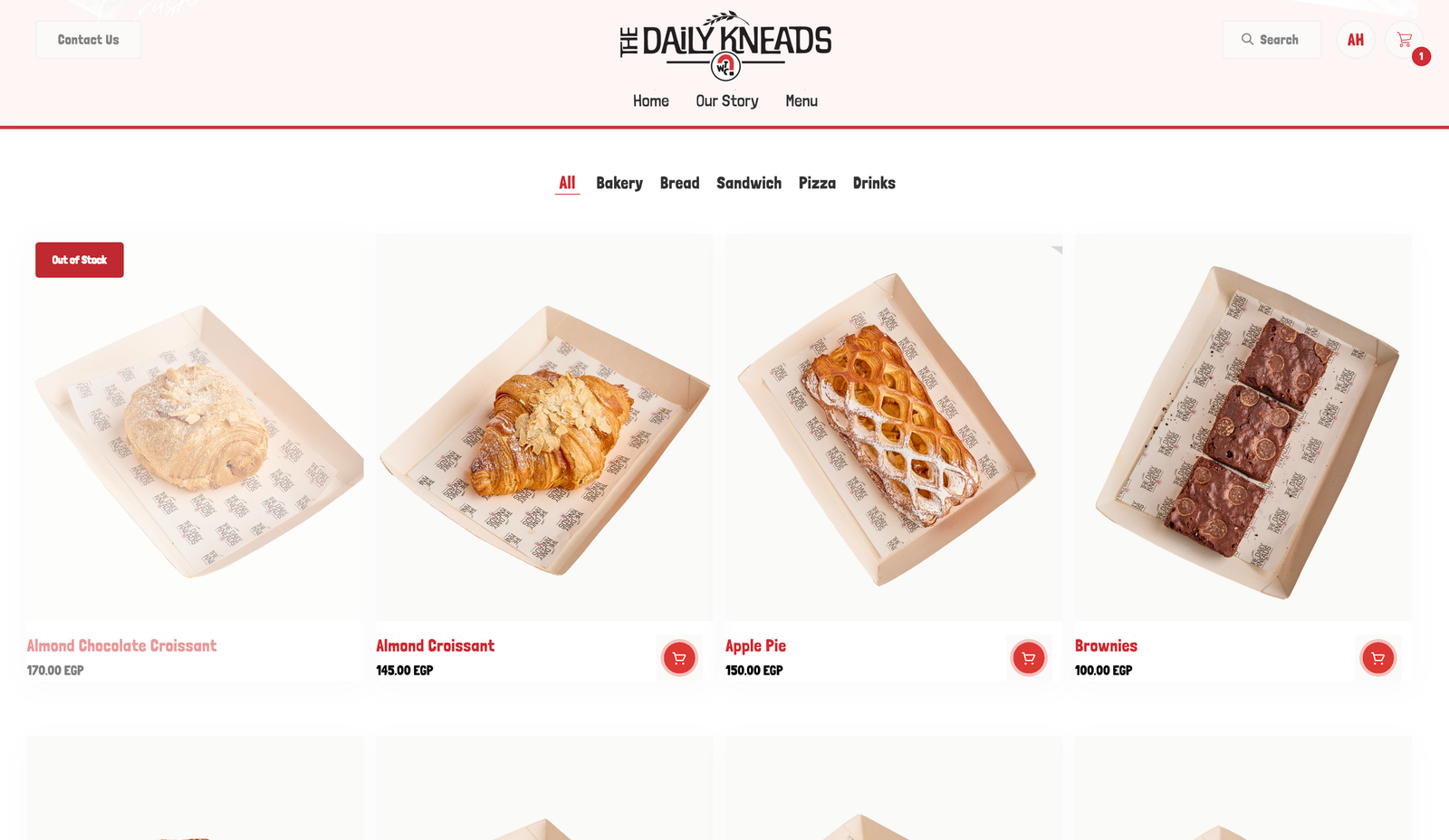
A bakery menu is browsed, not searched, so we built it as one continuous counter rather than five pages. Bakery, bread, sandwiches, Roman pizza and coffee each hold their own stretch of the same scroll, with the filter following you down it.
Sixty three items sit behind that, every one reading its price, its photograph and its availability live from the admin rather than from a hard coded page. Search covers item names and categories both, so the person who types sourdough and the person who types bread land in the same place.
One hand, one thumb, seven in the morning.
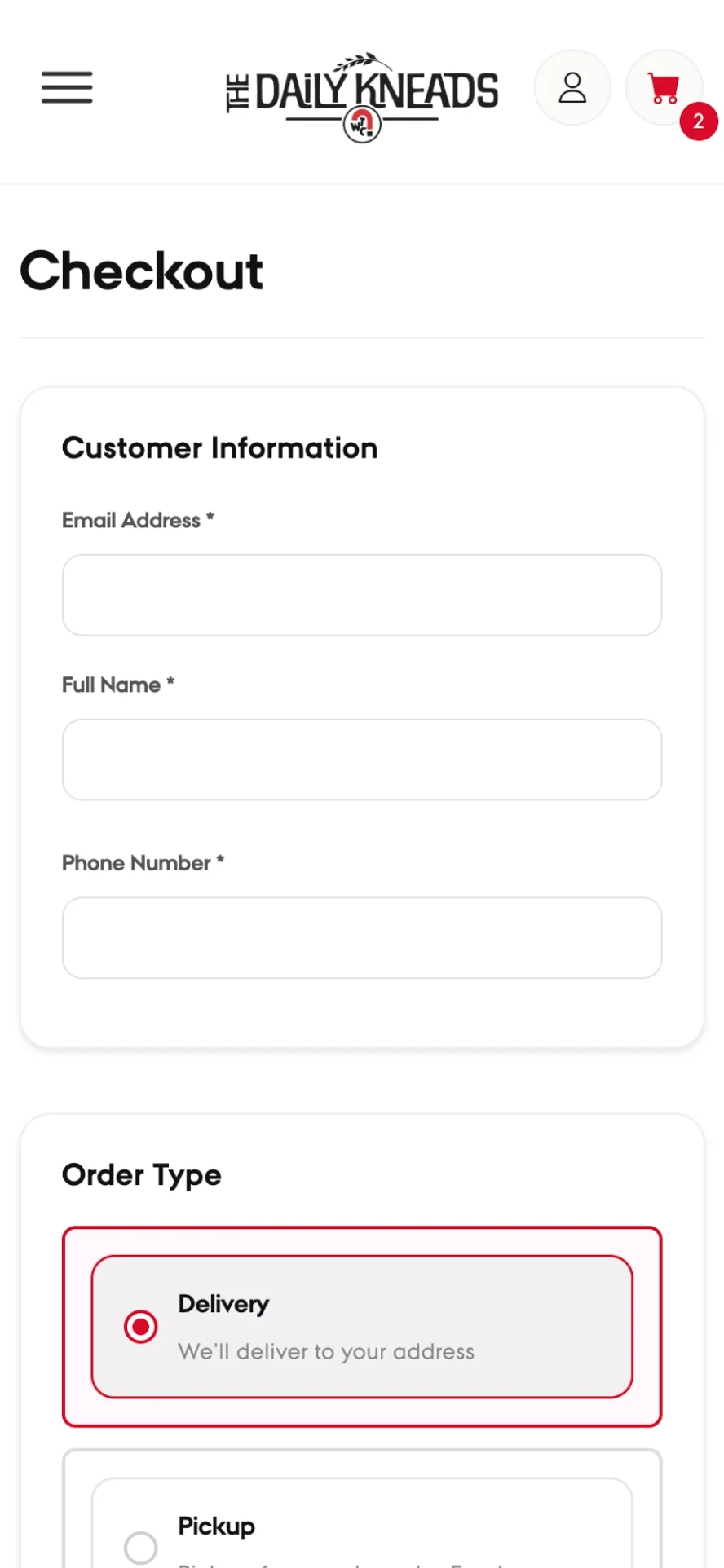
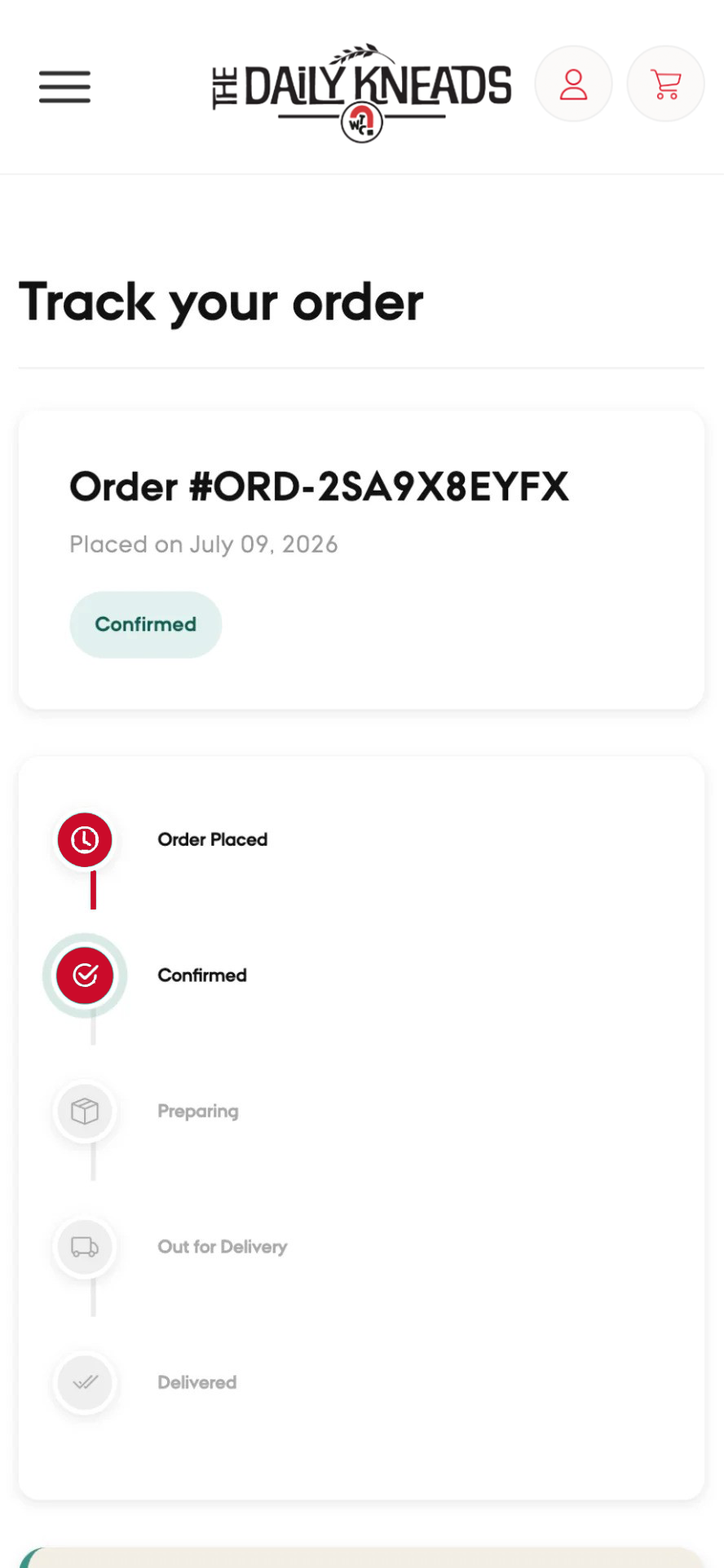
Most of this gets ordered on a phone before anyone is properly awake, so the flow was designed for a thumb first. Guests order without an account, and anyone who signs in with Google gets one that remembers their addresses. Payment runs through Paymob by card or wallet in Egyptian pounds, and pickup from any of the three bakeries costs nothing at all. Once the order is in, the tracking screen carries it from confirmed to preparing to out for delivery to delivered, updating itself over a live connection without a refresh.
The menu
Five categories, live prices, straight into the cart.
Checkout
Every delivery area with its own fee, or free pickup.
Live tracking
Confirmed to delivered, no refresh needed.
Paid today, proved overnight, baked for tomorrow.
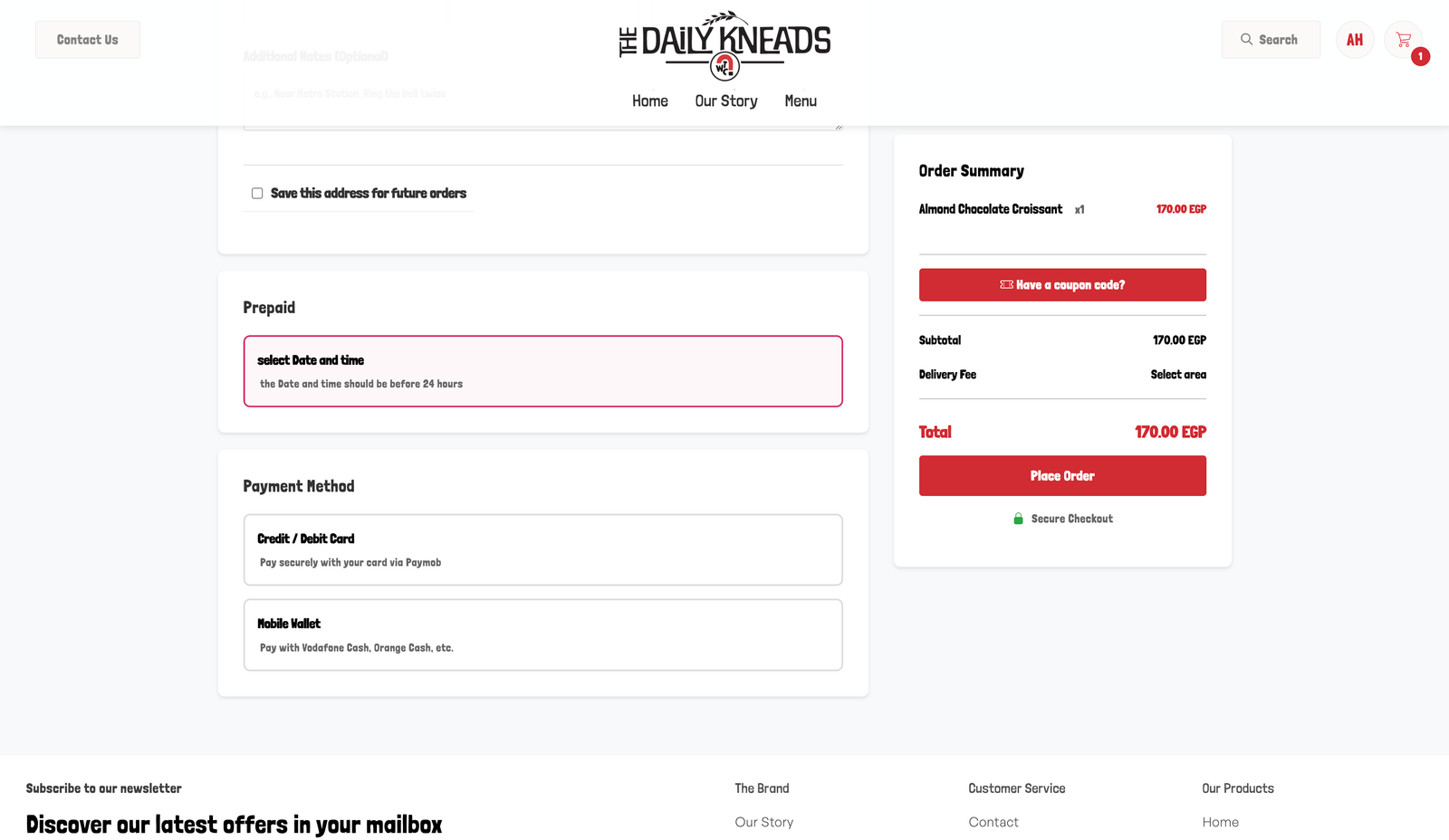
A croissant is ready now. A whole wheat sourdough proves for twenty four hours and cannot be conjured because somebody is hungry at nine. No bakery starts that dough on a promise either, so we built this one so that nothing reaches the kitchen unpaid.
Every item carries its own lead time and the thirteen breads carry twenty four hours each, so putting one in the cart closes today off. A scheduled slot opens in its place, refuses any hour sooner than the dough allows, refuses any hour the bakery is shut, and will not book further out than a fortnight. Payment is taken there and then by card or wallet, and only once it clears does the order become real: the stock moves, the ticket lands in the kitchen with its slot written into it, and the loaf is baked for the hour it was promised. It is sold before the oven is on.
Every order lands on the pass.
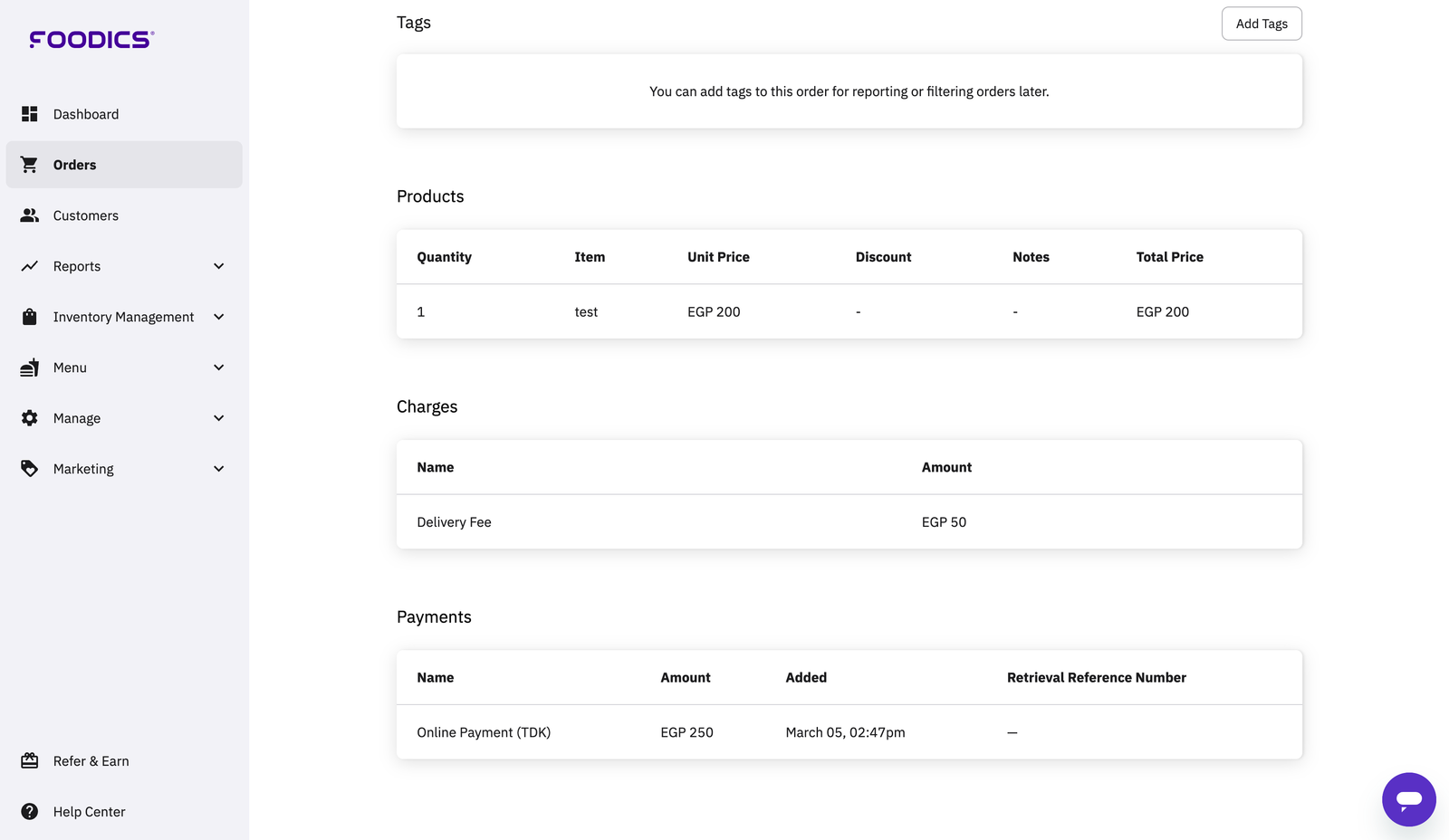
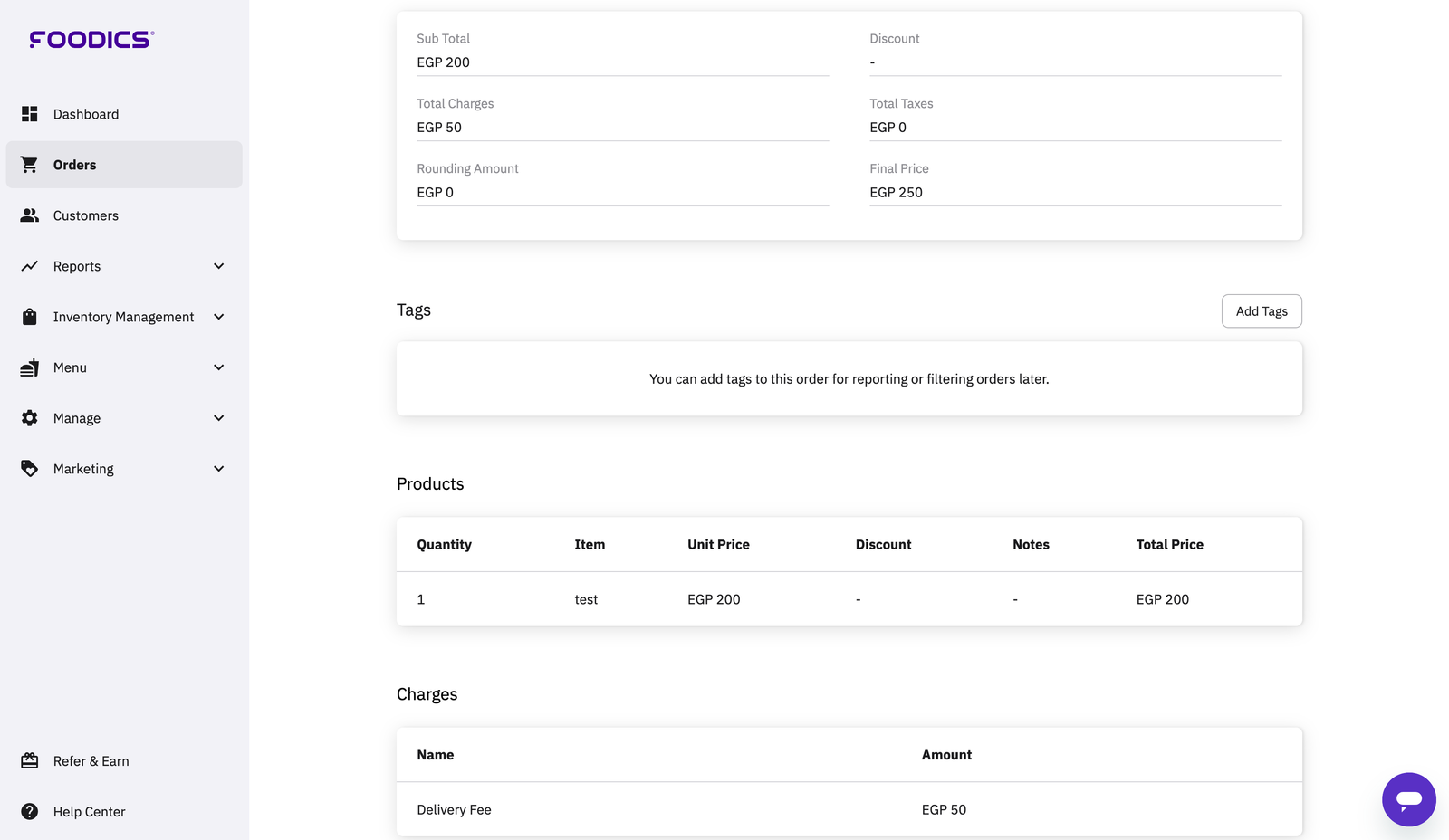
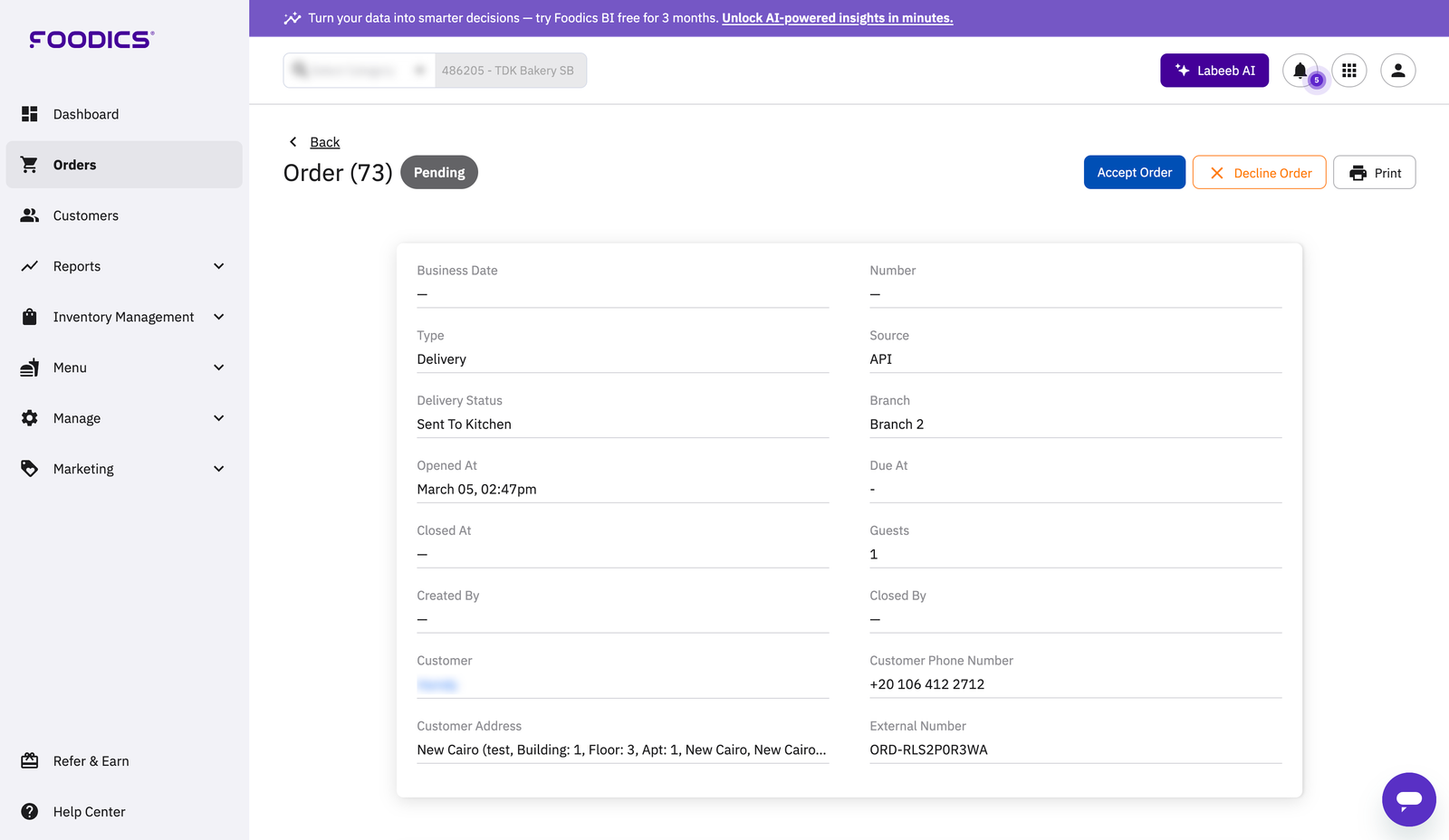
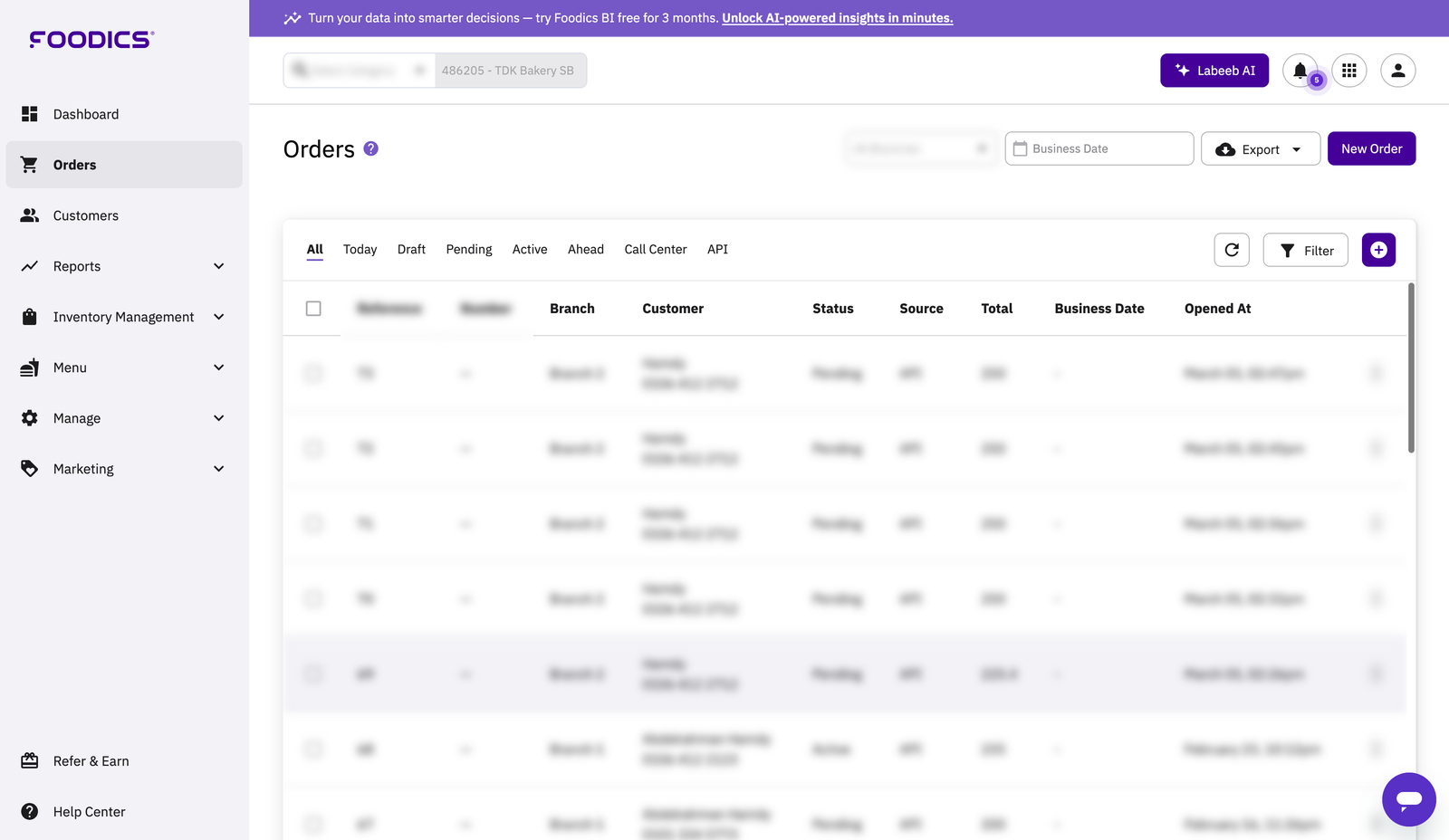
A website the kitchen cannot see is just a form. TDK runs on Foodics, so we wired the site straight into it. The moment payment clears, the order is pushed to the bakery's own system as a real ticket, mapped product for product, with the preorder time and any coupon written into the kitchen notes, and routed to New Cairo, Zamalek or Sheikh Zayed depending on where it is going.
VAT is the part nobody sees: prices read tax inclusive on the site, so taxable items are divided by 1.14 on the way out and Foodics adds the fourteen percent back, which is why the receipt matches the screen to the piastre. Status flows back the other way over a signed webhook, so a loaf marked out for delivery on the pass says out for delivery on the customer's phone.
The count on screen is the count on the shelf.
Bakeries run out. That is not a failure, it is the point of baking daily, but on a website it usually means somebody pays for something that stopped existing an hour ago. So the number had to be true everywhere at once.
Checkout locks the row while it checks, and the count itself only moves once the payment has cleared, so two people reaching for the last olive baguette in the same second cannot both leave with it. The moment that count moves, every open browser on the site hears it and redraws itself without a refresh, the card taking its badge and the button changing under it. Behind the counter the same number drives an inventory desk that reorders itself every three seconds and floats whatever is running low to the top. And when a bread finally reaches zero it does not go grey and vanish, it becomes tomorrow's order.
We handed TDK the bakery keys.
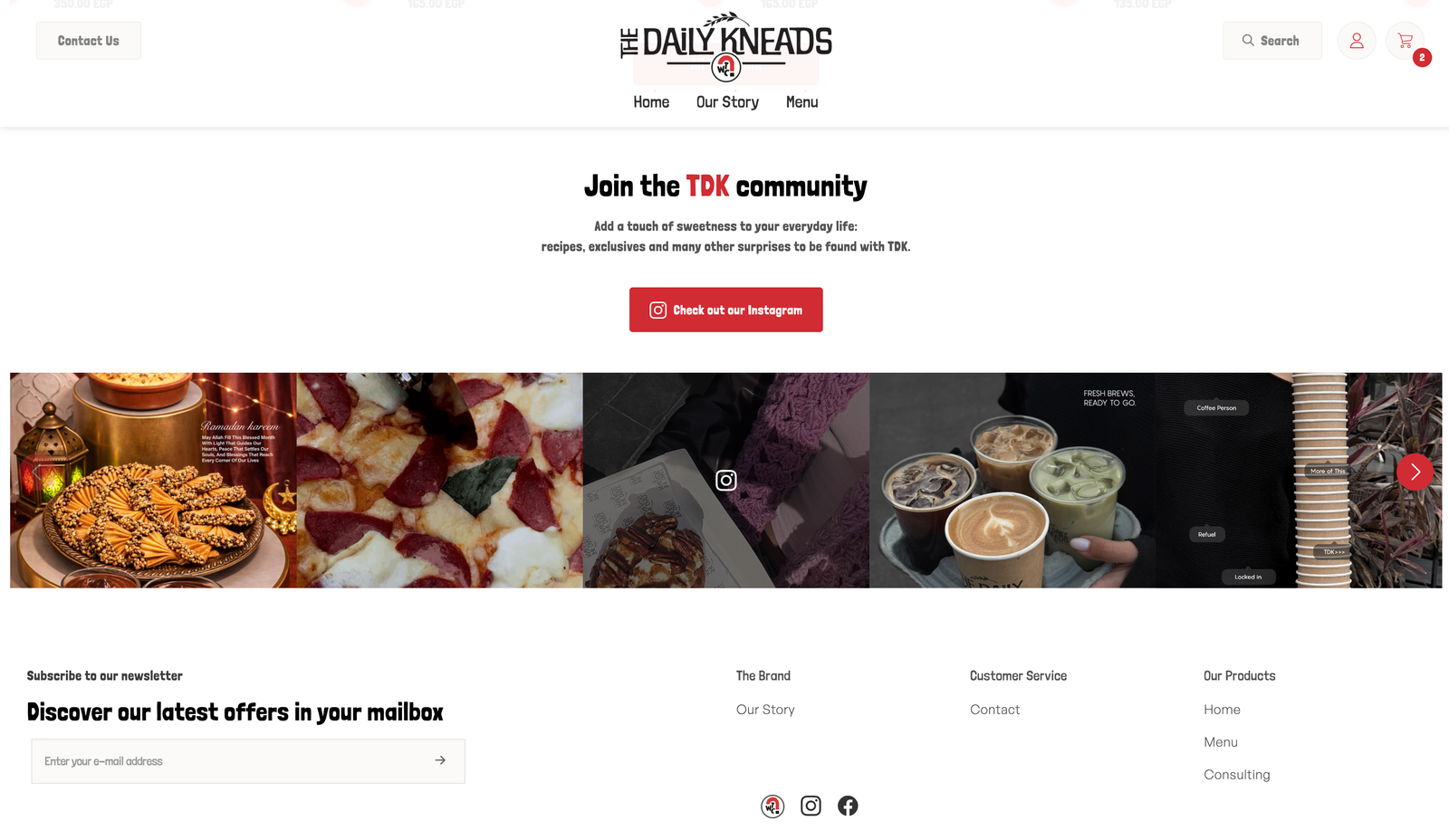
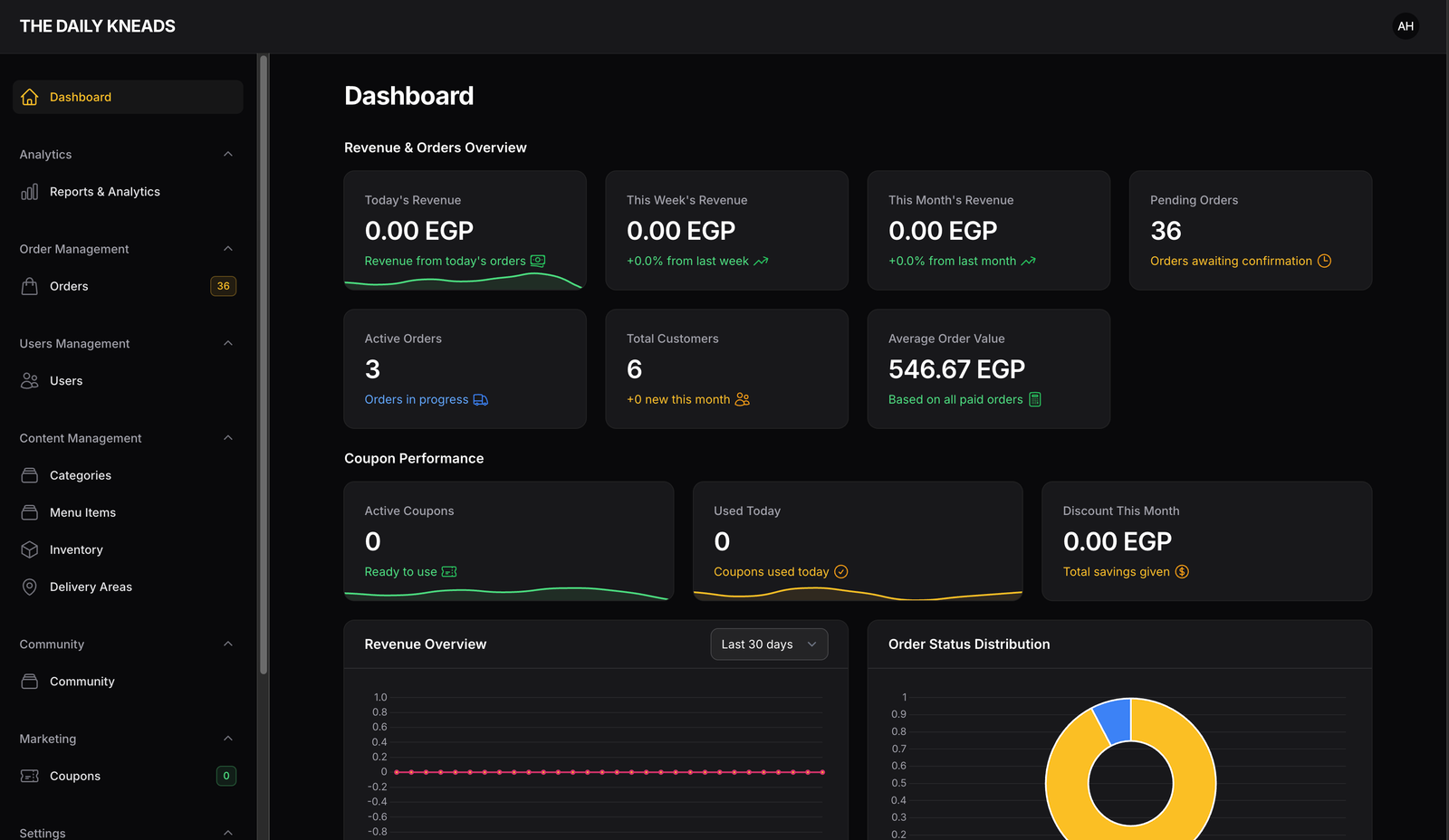
A menu that changes with the oven cannot wait on an agency. So the team runs all of it: products, categories, prices, photography, delivery areas and their fees, coupons, working hours, the Instagram wall, and every message the contact form takes. Stock has its own screen that refreshes every three seconds and floats the lowest counts to the top. A Foodics product attaches to a menu item in one dropdown, and the price and tax status come across with it.
The dashboard charts revenue by day, average order value, top sellers, repeat customers, fulfilment time and revenue by area, and exports the same numbers to PDF or Excel. We designed it, we built it, and we keep it running.
Built to carry the fourth bakery.
Three bakeries run on this today, and none of them are written into the code. Branches come from Foodics, every delivery area points at the counter that should bake for it, and the menu, the stock and the lead times all move per item and per branch. The next one needs an address, not a rebuild.
If you’re building a brand worth standing for, we’d like to hear about it.
The fastest way to start is a 30-minute conversation about what you’re working on. No deck, no pitch.